
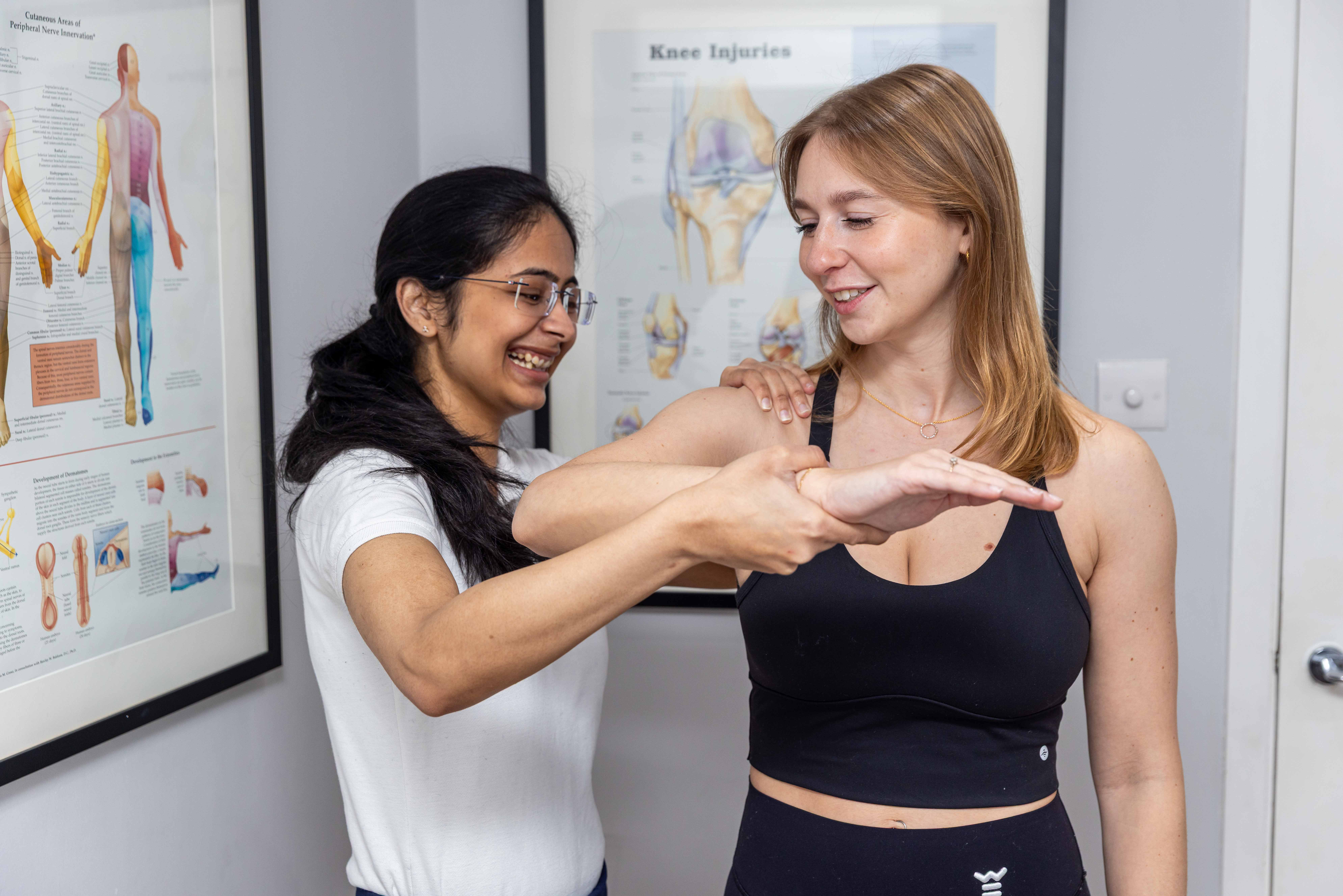
Shoulder pain is the third most common cause of people reporting to see a physiotherapist behind back pain and knee pain. There are number of problems that can affect your shoulder such as:
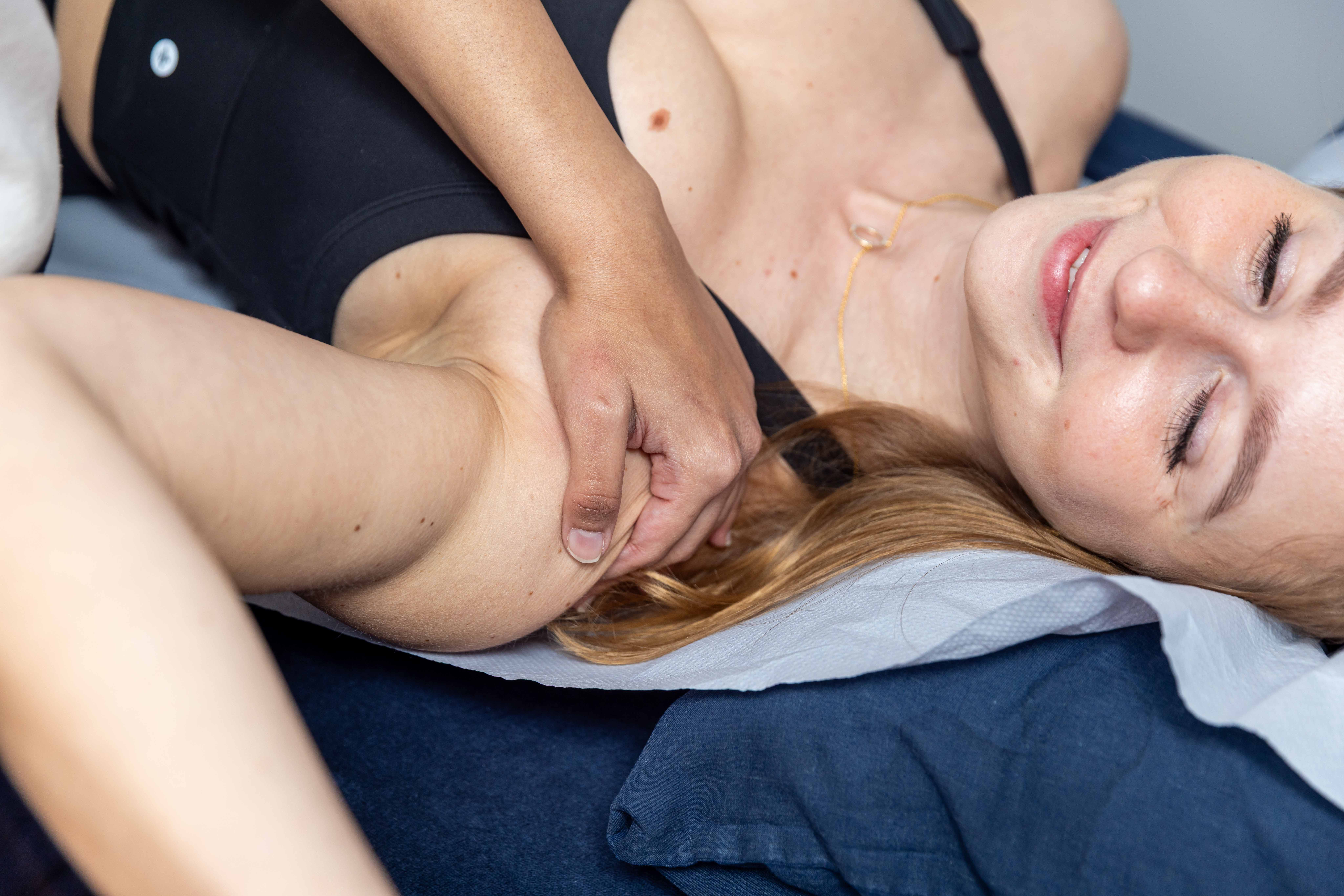
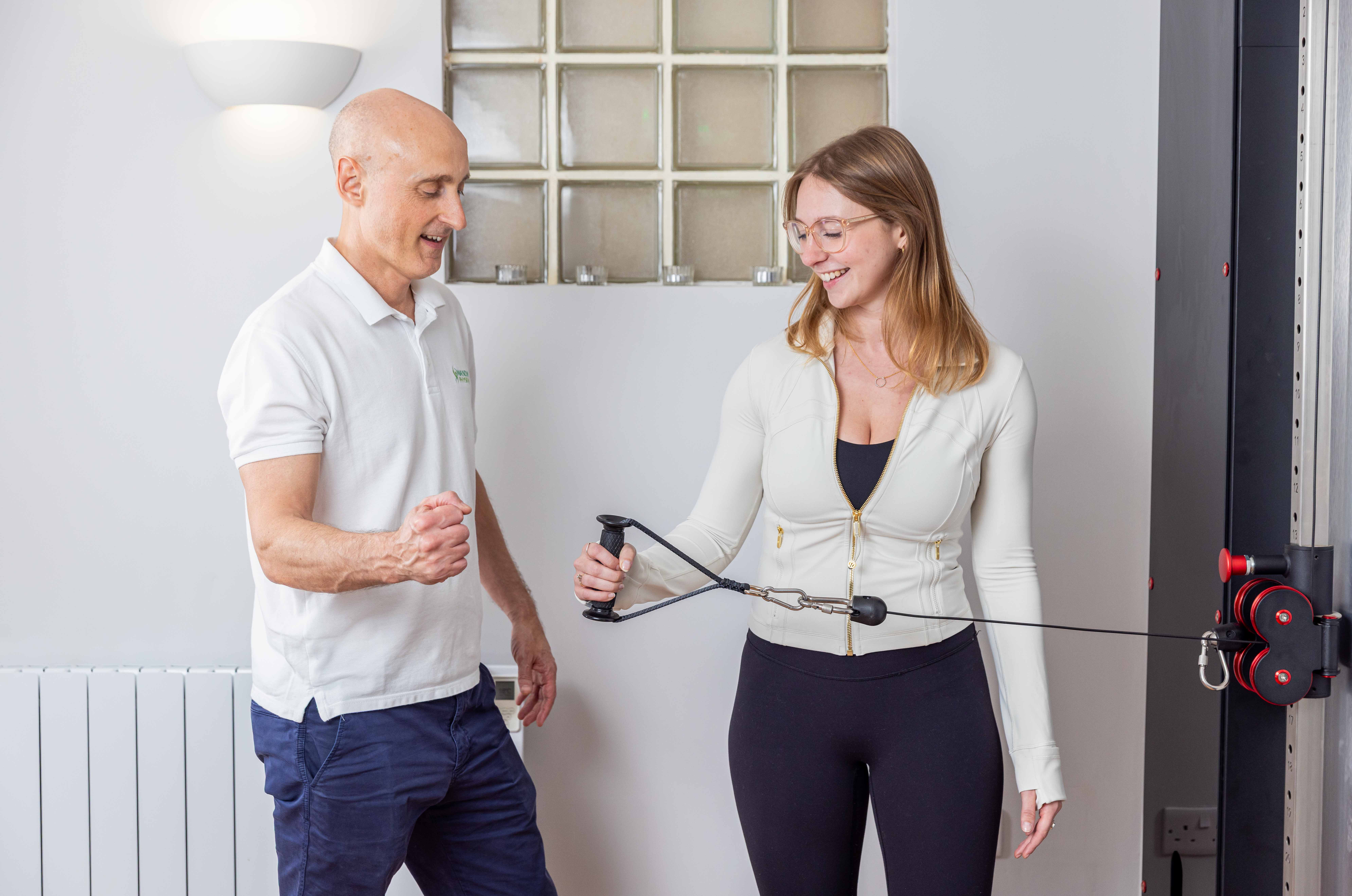
At our shoulder pain and upper limb clinic in Wandsworth Town, Putney, Clapham Junction, Chelsea and Battersea Nine Elms we will assess your shoulder and let you know what is causing your pain and put a treatment and exercise plan together for you.
In your first session with the physiotherapist we will carry out a very detailed assessment of your shoulder asking you how long you have had the pain, what may have caused it, how your symptoms differ throughout the day, what aggravates and what eases your symptoms, and also ask you some past medical history questions.
Once we have conducted this interview with you we will then assess your shoulder looking at your movement, strength and flexibility, and we will also do an ultrasound scan of your shoulder. Ultrasound scans are as good if not better than MRI at imaging the shoulder. Once we have come up with a diagnosis we will implement a treatment plan for your shoulder problem designed to reduce your pain and improve your shoulder function.
The rotator cuff is a small set of muscles that arise from your shoulder blade and insert into the arm bone and help to control the fine movements of your shoulder. We can see partial or complete rotator cuff tears on an ultrasound scan. Rotator cuff tears can be extremely painful causing shoulder pain, partial tears need physiotherapy and rehabilitation, whereas complete tears may need surgical repair after which you will require extensive physiotherapy.
Rotator calf tendinopathy is perhaps a more common cause of shoulder pain, again is seen quite well on ultrasound and can be managed very well with physiotherapy. This type of problem can be subdivided into the following categories.
An underloaded tendinopathy can occur. This type of tendon pathology occurs in sedentary people who do not put any kind of healthy everyday stress through the tendon, which should allow it to strengthen. It is also common in overweight and unhealthy people who produce inflammatory chemicals that cause increased tendon degeneration.
An acute reactive tendon is usually inflamed and painful and occurs in people who suddenly increase their load such as going from being fairly sedentary to deciding to do a lot of DIY or take up a new sport. The pain is reproduced by loading and can take several days to settle, there may be pain at rest and night pain.
This is a pathological tendon with disorganised and weak collagen only seen in people who have been over exercising for a long time. These types of people are experienced tennis players and golfers, for example, who have overused their shoulders for a number of years.
This type of tendon problem also includes people who have tears in their tendon and can be difficult to manage such as requiring shockwave treatment, sometimes surgery and extensive physiotherapy.
Another condition that causes extreme shoulder pain is called calcific tendinopathy or tendinitis. This is a very acute and painful tendon and present to physiotherapists with little or no movement of the shoulder and is extremely painful. On an ultrasound scan there will be calcium deposits seen in the tendon. This type of problem can be managed quite well with a steroid injection and physiotherapy.
The subacromial / sub deltoid bursa is a space between the deltoid muscle and tip of the shoulder blade and underlying rotator cuff tendons. The space has a thin film of fluid to aid movement and prevent friction. It is a very sensitive tissue and in most people is not bothersome. However, in some people it can become aggravated and swell, leading to shoulder pain. The SA/SD bursa can be seen on ultrasound and if it is swollen it can be treated with an ultrasound guided steroid injection.
The AC joint is where the tip of the shoulder blade (acromion) meets the collar bone (clavical). Its function is to aid movement. It can become aggravated and sprained during a fall or bang such as a skiing accident or in a rugby tackle. It can also become slightly worn as we age and develop signs of arthritis. This can present as pain on the top of the shoulder with overhead movements and may be aggravated by going to the gym or doing DIY. The AC joint can clearly be seen on US and if it is swollen and sore can be treated with an ultrasound guided steroid injection.
Frozen shoulder is a lay term for a painful condition that affects the shoulder joint. It is termed adhesive capsulitis – a term that describes the shoulder joint capsules becoming stiff and stuck causing pain and reduced range of movement.
Typically the onset of frozen shoulder can take anywhere from a couple of months up to a year. In this time you will experience shoulder pain with a gradually worsening range of movement and stiffness. The loss of range of movement can be quite severe with you losing the ability to lift your arm above shoulder height. The pain can also be quite severe.
The shoulder joint capsule normally contains 30ml of joint fluid and the bottom aspect of the joint capsule is baggy allowing room for the arm bone to move into on arm movements. However, in a frozen shoulder the capsule shrinks to as little as 3ml of fluid – thus you can see how this would affect the joint’s range of movement.
In fact your physio will be able to diagnose a frozen shoulder by the amount of movement you have in your shoulder and from your pattern of symptoms. If they are unsure they will ask your GP to refer you for an x-ray to rule out arthritis. If your x-ray is normal and you have shoulder pain and a gross loss of movement – you have a frozen shoulder.
It is estimated 1 in 20 people in the UK may suffer from a frozen shoulder, with the most common age of onset being between 40 and 60 years of age. The condition is more common in women than men. You are more likely to suffer a frozen shoulder if you are diabetic, have heart disease or have had previous shoulder trauma. There may also be an infectious cause that is at present still not properly understood.
A frozen shoulder can be managed with painkillers and physiotherapy range of movement exercises and joint mobilisation, acupuncture may also help. If physiotherapy is not helping you could be referred for a steroid injection or for a hyper-dilation injection that aims to restore the size of the joint capsule.
Frozen shoulders do typically get better, however in a worse-case scenario they could take up to a year of longer to resolve.
Don’t let your shoulder continue to trouble you, book in to our shoulder clinic today.
After we have diagnosed your shoulder injury and completed your treatment, the next step is to get you back to training and eventually your sport. However, the biggest risk factor for a shoulder injury is a previous similar shoulder injury. In our Rehab Lab we will perform a battery of functional and strength tests using motion analysis and strength dynamometry. With this important data we can accelerate your strength and conditioning and prepare you for your return to sports programme.

 Anirudh Mathur
Trustindex verifies that the original source of the review is Google.
I have been coming here since 6 months now for physiotherapy on my ankle ligament, and I cannot recommend it enough! I have been treated by Nuzhat Shaikh, who has helped me reduce my daily chronic pain, and has helped me gain confidence in going back into sports. She took the time to understand my problems and provided bespoke treatment, tracking progress every session and recommending mitigating actions as required. Highly recommend! Valentin BalaschenkoAs an amateur long-distance triathlete, I developed a sciatic nerve injury that plagued me for over six months, to the point where I stopped enjoying the sport I love. Kirsty quickly identified the root cause, and after several treatment sessions the pain gradually disappeared. She also recommended physiotherapy exercises and Pilates classes to address the underlying issue and help prevent it from returning. The best validation of the treatment came recently when I completed an ultra-marathon with significant elevation, putting my sciatica to the ultimate test. There wasn’t a single niggle—my leg felt as good as new. Thank you, Kirsty, and the entire Wandsworth Therapy team, for helping me get back to doing what I love!
 Natasha KellyI visited Wandsworth Physiotherapy after straining my ACL. Nuzhat tailored my sessions to my injury and set out a clear routine of exercises to aid my recovery. Nuzhat was flexible with timings, provided massage, acupuncture and exercises. Thank you so much.
 Rhys HarrisChristina was extremely helpful during my physio sessions, super clear throughout and prescribed the best approach to resolve my overloaded arch. Thank you!
 HenryNuzhat has been my physiotherapist at Nine Elms for the last two months. Don't be fooled the quiet demeanour of this unassuming lady. She is an outstanding physiotherapist. Her knowledge of health and nutrition and her techniques (which include focused massage and acupuncture) to deal with my tendonitis and muscle strain have put me well on the road to recovery. The exercises she has given me in the WPO app (stretching, bands, ball, light weights) are tailored to me and have been a big help. Nuzhat, I can't thank you enough.
 Harry Symes-ThompsonI had a fantastic experience with Nuzhat. I had been struggling with pack pain for over 6 months and she conducted a comprehensive assessment of the issue and put me on a path to recovery through a combination of manual therapy and acupuncture. I am so happy with the progress and Nuzhat has been brilliant.
 Malgorzata KralaI am so happy with my physiotherapy sessions. They were able to fix me twice now each time quicker than expected.
 Michael FoxFriendly staff and very professional. Diagnosed and treated my shoulder issue very quickly with no re occurrence of the problem. Would highly recommend.
 Maggie SekaraPilates with Shreya - one of the best Pilates classes I've attended. I go to the Advanced Clinical Pilates class with Shreya at Wandsworth Physiotherapy and really enjoy it. The class is challenging and intense in the best way, and I always leave feeling like I've had a deep and effective workout. Shreya is friendly, attentive and knowledgeable. She pays close attention to form, ensures everyone is exercising safely, and structures the class brilliantly - with a warm-up to prepare the body for deeper work and a relaxing body scan at the end. I attended a couple of beginner classes before joining the advanced group, but once I moved to Shreya's class it was a perfect fit for my experience level. The sessions are focused, engaging and incredibly rewarding. Highly recommend.Google rating score: 4.9 of 5, based on 489 reviews
How can we assist?