
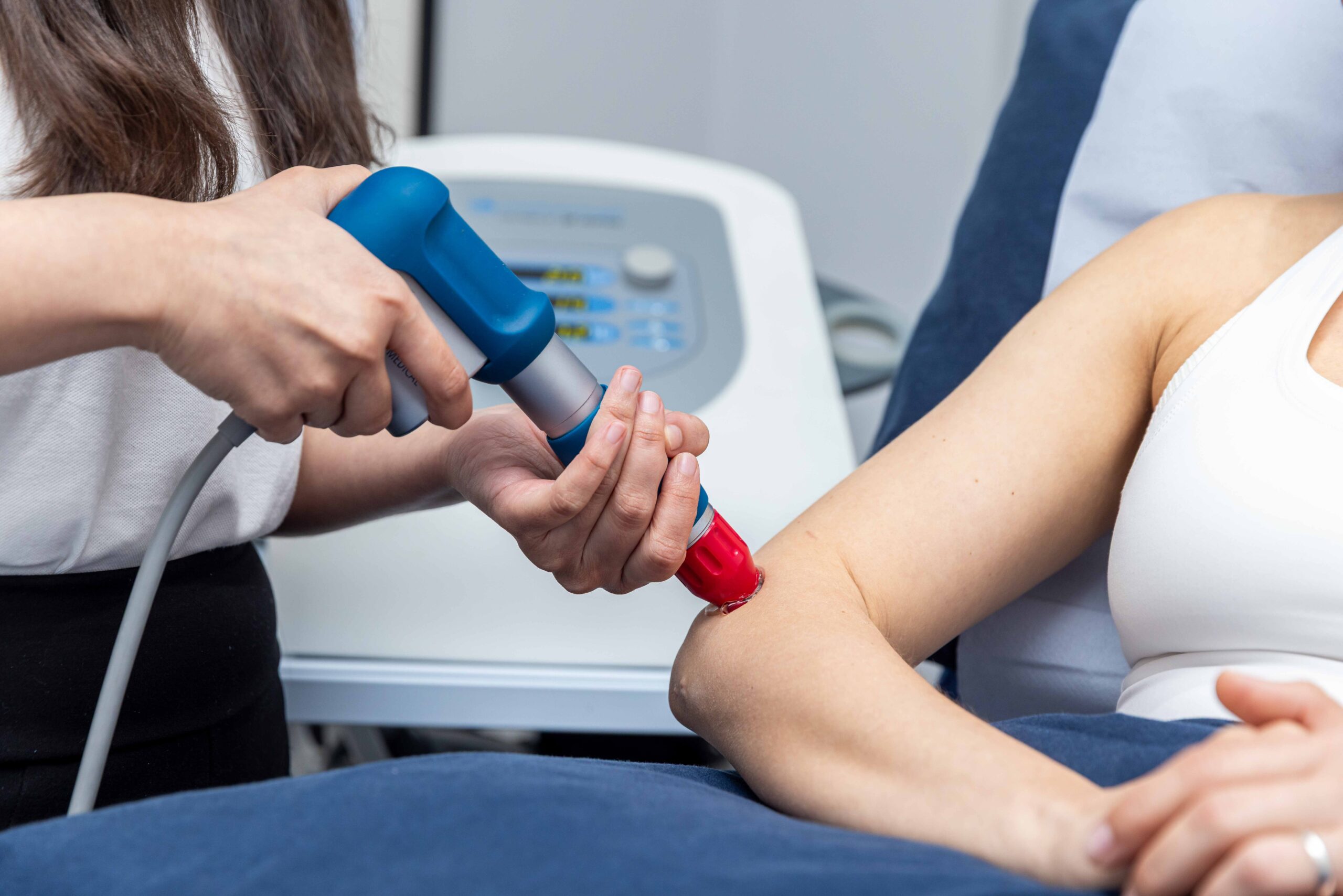
At Wandsworth Physiotherapy & Osteopathy we provide state-of-the-art shockwave therapy to treat stubborn tendon, muscle, and soft tissue problems across our Wandsworth Town, Putney, Clapham Junction, Battersea Nine Elms and Chelsea clinics. Shockwave therapy (ESWT) uses acoustic waves to stimulate healing, reduce pain, and improve mobility when exercise and manual therapy alone may not be enough.
We are proud to now offer both radial and focused shockwave therapy – allowing us to choose the most effective treatment for your condition. Shockwave is best used after an appointment with an ultrasound scan so the injured tissues can be evaluated and then targetted with treatment.
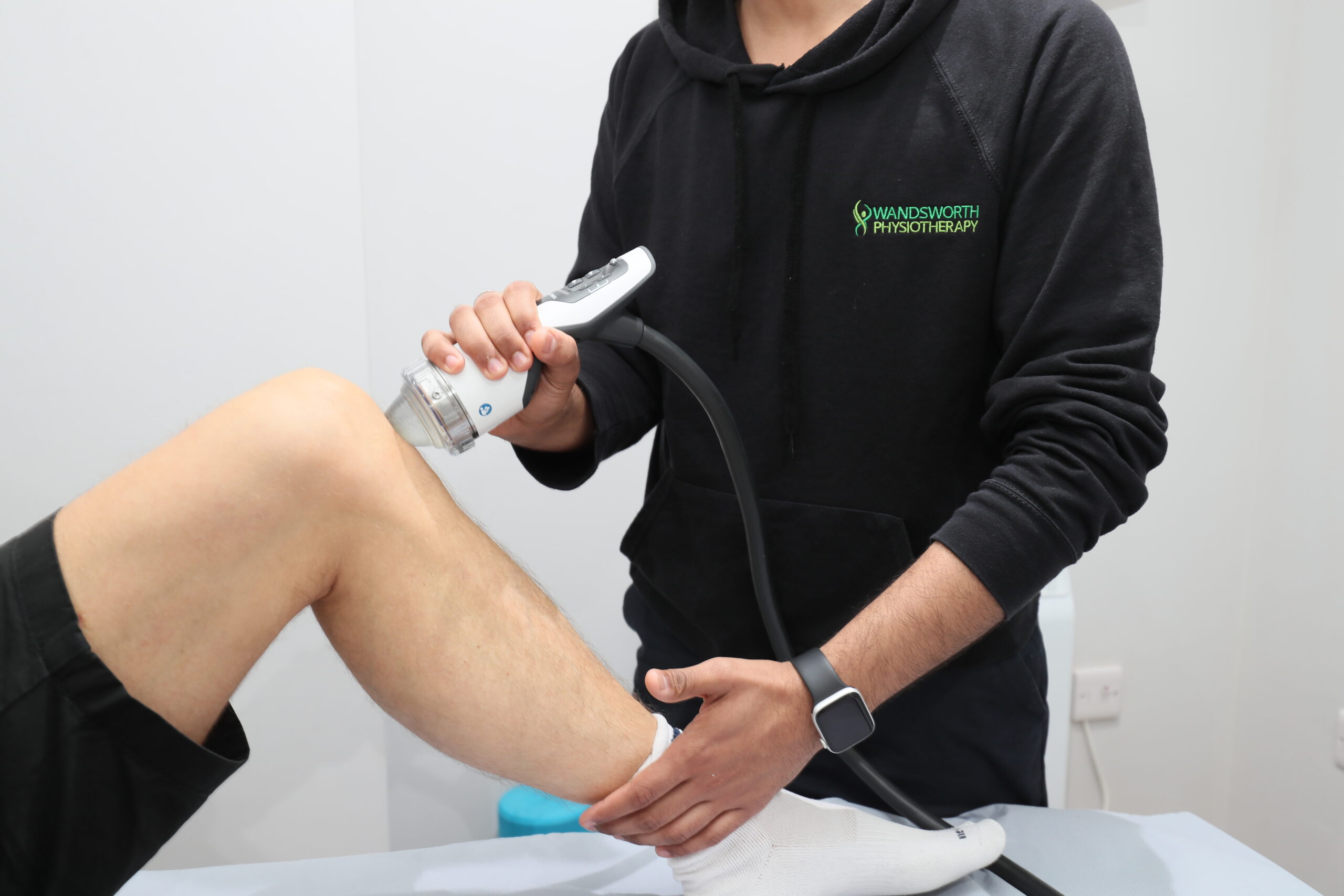
Most patients require 3–6 sessions of radial or focused shockwave therapy spaced about a week apart. Focused shockwave may require fewer sessions due to its precision and energy delivery. Your physiotherapist will discuss the right number of sessions for your condition during your assessment.
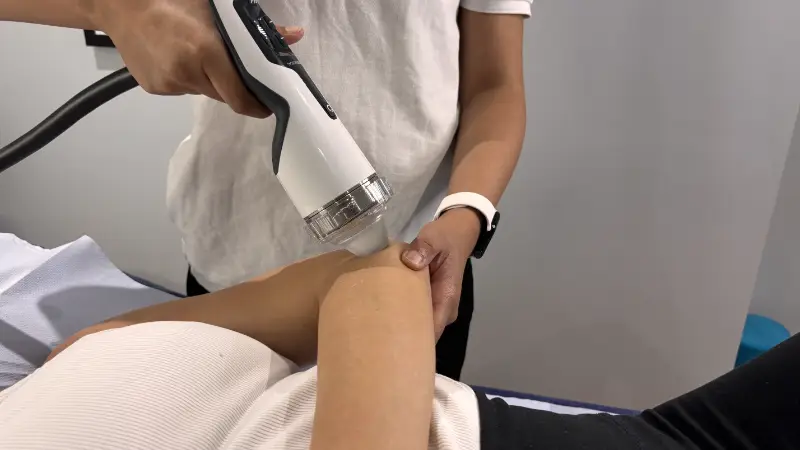
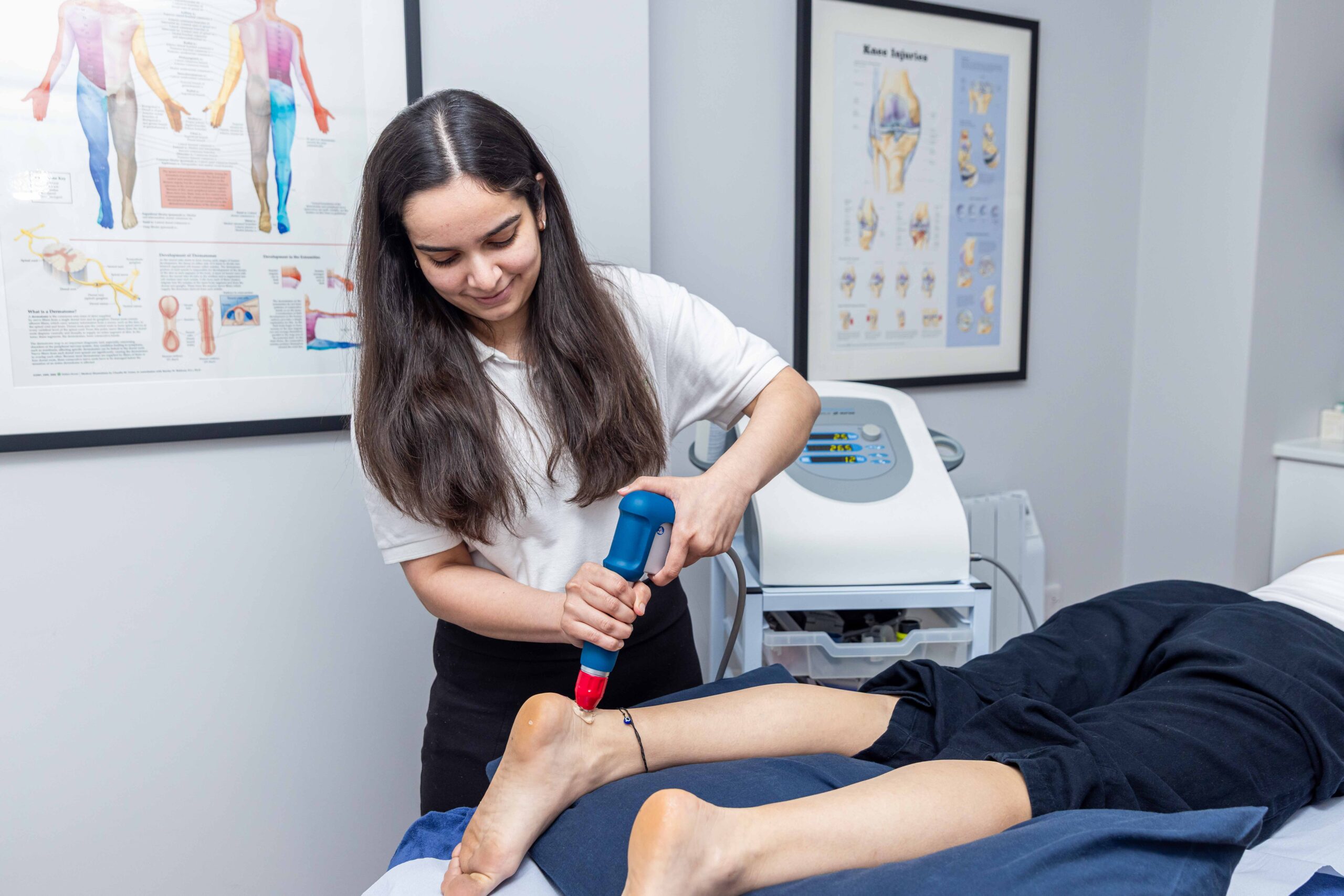
Shockwave therapy is a non-invasive treatment that uses sound wave pulses to stimulate the body’s natural healing response in chronic tendon and soft tissue injuries. It’s typically used once symptoms haven’t responded to rest, exercise or other conservative treatment on their own.
Our shockwave therapy service always pairs treatment with a full assessment and rehabilitation programme, rather than using it as a standalone fix.
Our article on the essentials of focused shockwave therapy explains how the treatment works on a tissue level for conditions like these.
Not always, but a diagnostic ultrasound scan can be genuinely useful where the diagnosis isn’t clear-cut or symptoms have been going on for a long time. Ultrasound lets your clinician view the tendon in real time and confirm exactly what’s being treated before starting shockwave.
In most cases, yes — aside from avoiding load on the treated area for roughly 24 hours after each session. Staying appropriately active is usually part of recovery rather than something to avoid, though your physiotherapist will adjust your training load as treatment progresses. This is a key focus for active patients attending our Running Injury Clinic, where identifying and correcting the cause of an injury sits alongside treatment.
Yes, depending on the diagnosis. We often combine shockwave with ultrasound imaging, structured rehabilitation and, where appropriate, ultrasound guided injections as part of a broader treatment plan — the right combination depends entirely on what’s identified during your assessment.
For specific shoulder conditions — particularly calcific tendinopathy and long-standing rotator cuff problems — shockwave is sometimes recommended as part of a wider treatment programme. Our Shoulder Clinic can advise whether it’s a suitable option for your specific shoulder diagnosis.

 Anirudh Mathur
Trustindex verifies that the original source of the review is Google.
I have been coming here since 6 months now for physiotherapy on my ankle ligament, and I cannot recommend it enough! I have been treated by Nuzhat Shaikh, who has helped me reduce my daily chronic pain, and has helped me gain confidence in going back into sports. She took the time to understand my problems and provided bespoke treatment, tracking progress every session and recommending mitigating actions as required. Highly recommend! Valentin BalaschenkoAs an amateur long-distance triathlete, I developed a sciatic nerve injury that plagued me for over six months, to the point where I stopped enjoying the sport I love. Kirsty quickly identified the root cause, and after several treatment sessions the pain gradually disappeared. She also recommended physiotherapy exercises and Pilates classes to address the underlying issue and help prevent it from returning. The best validation of the treatment came recently when I completed an ultra-marathon with significant elevation, putting my sciatica to the ultimate test. There wasn’t a single niggle—my leg felt as good as new. Thank you, Kirsty, and the entire Wandsworth Therapy team, for helping me get back to doing what I love!
 Natasha KellyI visited Wandsworth Physiotherapy after straining my ACL. Nuzhat tailored my sessions to my injury and set out a clear routine of exercises to aid my recovery. Nuzhat was flexible with timings, provided massage, acupuncture and exercises. Thank you so much.
 Rhys HarrisChristina was extremely helpful during my physio sessions, super clear throughout and prescribed the best approach to resolve my overloaded arch. Thank you!
 HenryNuzhat has been my physiotherapist at Nine Elms for the last two months. Don't be fooled the quiet demeanour of this unassuming lady. She is an outstanding physiotherapist. Her knowledge of health and nutrition and her techniques (which include focused massage and acupuncture) to deal with my tendonitis and muscle strain have put me well on the road to recovery. The exercises she has given me in the WPO app (stretching, bands, ball, light weights) are tailored to me and have been a big help. Nuzhat, I can't thank you enough.
 Harry Symes-ThompsonI had a fantastic experience with Nuzhat. I had been struggling with pack pain for over 6 months and she conducted a comprehensive assessment of the issue and put me on a path to recovery through a combination of manual therapy and acupuncture. I am so happy with the progress and Nuzhat has been brilliant.
 Malgorzata KralaI am so happy with my physiotherapy sessions. They were able to fix me twice now each time quicker than expected.
 Michael FoxFriendly staff and very professional. Diagnosed and treated my shoulder issue very quickly with no re occurrence of the problem. Would highly recommend.
 Maggie SekaraPilates with Shreya - one of the best Pilates classes I've attended. I go to the Advanced Clinical Pilates class with Shreya at Wandsworth Physiotherapy and really enjoy it. The class is challenging and intense in the best way, and I always leave feeling like I've had a deep and effective workout. Shreya is friendly, attentive and knowledgeable. She pays close attention to form, ensures everyone is exercising safely, and structures the class brilliantly - with a warm-up to prepare the body for deeper work and a relaxing body scan at the end. I attended a couple of beginner classes before joining the advanced group, but once I moved to Shreya's class it was a perfect fit for my experience level. The sessions are focused, engaging and incredibly rewarding. Highly recommend.Google rating score: 4.9 of 5, based on 489 reviews
How can we assist?