
Shoulder Injuries in Tennis and Golf | Spring is here, the evenings are lighter, and courts and fairways are filling up. Tennis racquets are swinging and golf clubs are hitting balls down the driving range. But all that shoulder rotation, overhead serving, and swinging can take a toll on your shoulders — sometimes more than you realise.
Whether you’re an enthusiastic weekend player or a competitive amateur, shoulder pain can limit your performance and enjoyment.
And while it’s common to “play through it,” ignoring early signs of injury often leads to more serious problems down the line.
At Wandsworth Physiotherapy’s Shoulder & Upper Limb Clinic, we see a lot of patients with shoulder issues from tennis and golf, and we know that early assessment, physiotherapy, and sometimes ultrasound-guided injections are the keys to staying active, pain-free, and performing at your best.
Key Learning Points
- Shoulder injuries are common in tennis and golf, especially as spring arrives and evenings get lighter.
- Overuse and technique errors often contribute to pain and reduced performance.
- Physiotherapy is very effective for managing shoulder injuries and preventing long-term issues.
- Ultrasound-guided injections can be used for persistent pain and inflammation.
- Early assessment and treatment help you return to your sport faster and safer.
- The Shoulder & Upper Limb Clinic at Wandsworth Physiotherapy offers expert care for all levels of athletes.
Why Shoulder Injuries Are Common in Racket and Golf Sports
The Role of Repetitive Motion and Technique
Tennis and golf both rely on repetitive overhead and rotational movements. Serving, forehand and backhand swings, and golf drives put significant stress on the rotator cuff muscles, shoulder joint capsule, and the surrounding shoulder muscles.
Add in fatigue, slight technique errors, or skipping warm-ups, and your shoulder is vulnerable to injury. Even minor imbalances in strength or flexibility can lead to overuse injuries that can creep in over weeks and months.
Common Shoulder Injuries in Tennis and Golf
Rotator Cuff Tendinopathy and Tears
The rotator cuff is a group of muscles that stabilise and move the shoulder. Tendinopathy (degeneration of tendon tissue) and tears are common in racket sports and golf due to repetitive loading.
Symptoms include:
- Pain during overhead movements
- Weakness or loss of power in swings
- Night pain, especially when lying on the affected side
Early physiotherapy can help shoulder injuries in tennis and golf by strengthening the cuff, improving biomechanics, and preventing worsening tears.
Shoulder Impingement and Bursitis
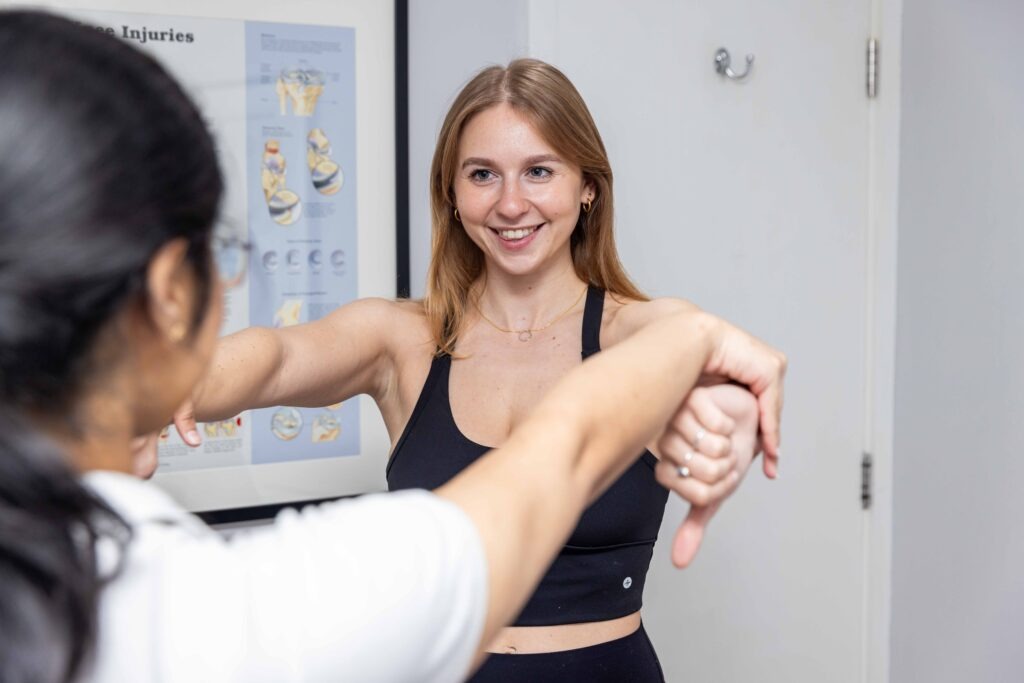
Impingement occurs when tendons or bursae (fluid-filled sacs) are compressed during shoulder movement. Golfers often feel pain when raising the arm overhead, while tennis players may notice it during serves or volleys.
Physiotherapy focuses on posture, scapular control, rotator cuff strength, and technique adjustments to relieve pressure and restore function.
If a bursitis (inflammation of the fluid filled sack) is the present, then a steroid injection might be a good option alongside physiotherapy rehab.
Labral Tears and Instability
The labrum is a cartilage ring that deepens the shoulder socket. Sudden trauma, repetitive stress, or over-rotation can cause labral tears.
Symptoms include:
- Clicking or catching
- Feeling the shoulder “give way”
- Pain during high-velocity swings
Physiotherapy for shoulder instability and labral tears focuses on strengthening the rotator cuff and scapular muscles to stabilise the shoulder joint, often preventing the need for surgery.
Rehab programs typically progress from isometric exercises and range of motion (ROM) work to dynamic, to harder, strength-based exercises, and then neuromuscular control drills over a period of 3 – 6 months.
Early Signs You Shouldn’t Ignore
Pain During Specific Movements
Persistent pain when serving, swinging, or driving is a red flag. Don’t assume it will just go away; early assessment and treatment will help prevent long term issues.
Reduced Range of Movement and Weakness
If your shoulder feels stiff or weak, especially in overhead positions, it’s a sign that something needs attention. Even minor weakness can alter technique and put you at risk of further injury.
How Physiotherapy Can Help Shoulder Injuries in Tennis and Golf
Individualised Assessment and Exercise Programs
Our physiotherapists assess:
- Shoulder strength and flexibility
- Scapular mechanics and posture
- Functional movement patterns
We then design a personalised rehab program to restore strength, mobility, and coordination, tailored to tennis, golf, or your lifestyle.
Manual Therapy and Posture Correction
Hands-on techniques, including joint mobilisation and soft tissue release, can reduce stiffness and pain for shoulder injuries in tennis and golf.
Correcting posture and technique can also prevent the problem from returning.
Ultrasound-Guided Injections for Persistent Pain
When Injections Can Help
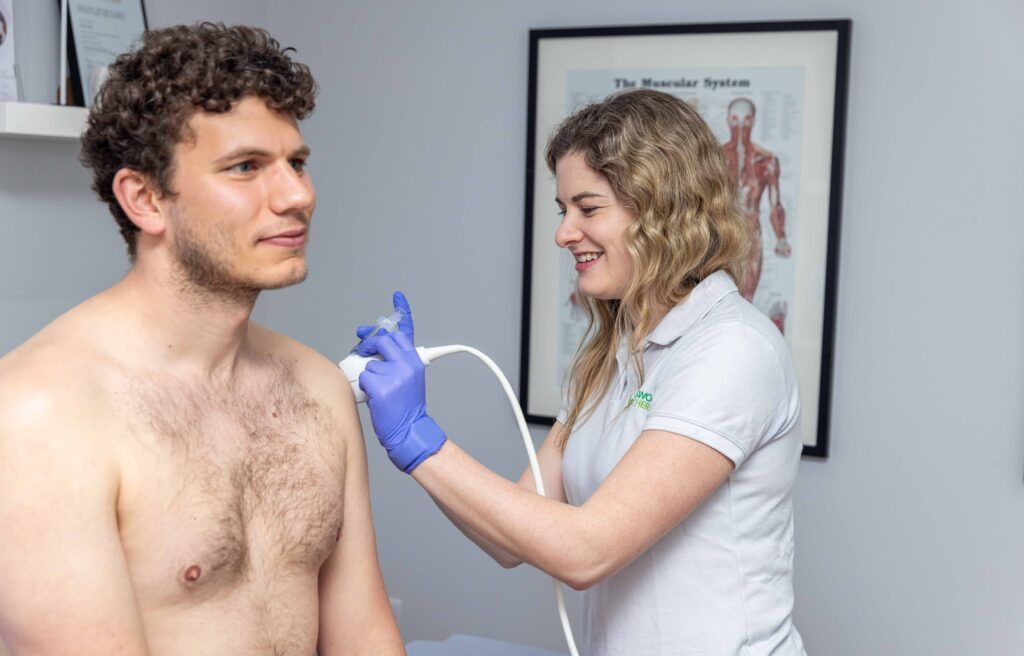
For some injuries, especially inflammation in the bursae or tendons, ultrasound-guided corticosteroid or platelet-rich plasma injections provide targeted pain relief.
Using ultrasound ensures the injection is precise, safe, and effective, allowing you to continue rehab with less discomfort.
Corticosteroid
Corticosteroid injections are highly effective at reducing pain and inflammation in irritated joints, bursae, or tendons.
Relief is typically quick, often within days, though the effect may last from several weeks to a few months depending on the condition.
Platelet-Rich-Plasma (PRP)
Platelet-Rich Plasma (PRP) therapy uses your own blood to create a concentration of your platelets and plasma, which are rich in these growth and repair factors. This is then injected into the injured area to support repair and tissue healing.
Safe, Targeted Pain Relief to assist with rehab.
Injections are not a stand alone treatment and are always combined with physiotherapy. They help reduce inflammation, restore movement, and allow you to engage in strengthening exercises safely and without pain.
Returning to Tennis or Golf Safely
Gradual Loading and Technique Work
Jumping straight back into full swings or serves can aggravate injuries.
Gradual loading, slowly increasing intensity and volume, prevents relapse and builds strength safely.
Preventing Future shoulder Injuries in Tennis and Golf
Regular strengthening, mobility work, and technique review are key to long-term shoulder health. Even after recovering from an injury, ongoing physiotherapy or strength and conditioning work, ensures your shoulder stays strong for many seasons of tennis and golf.
References
- Seitz, A.L., McClure, P.W., Finucane, S., Boardman III, N.D. and Michener, L.A., 2011. Mechanisms of rotator cuff tendinopathy: intrinsic, extrinsic, or both?. Clinical biomechanics, 26(1), pp.1-12.
- ElMeligie, M.M., Allam, N.M., Yehia, R.M. and Ashour, A.A., 2023. Systematic review and meta-analysis on the effectiveness of ultrasound-guided versus landmark corticosteroid injection in the treatment of shoulder pain: an update. Journal of ultrasound, 26(3), pp.593-604.
- Cools, A.M., Borms, D., Castelein, B., Vanderstukken, F. and Johansson, F.R., 2016. Evidence-based rehabilitation of athletes with glenohumeral instability. Knee Surgery, Sports Traumatology, Arthroscopy, 24(2), pp.382-389.