
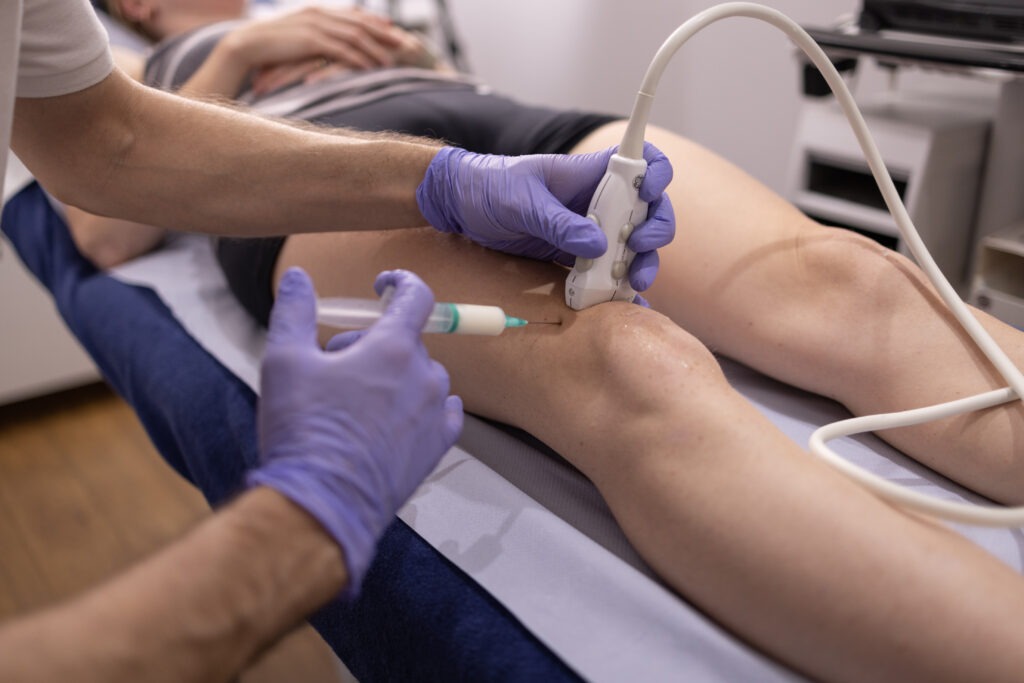
If you’ve been diagnosed with osteoarthritis (OA), you may be wondering whether surgery is inevitable. It’s a common concern, particularly if knee or hip pain is beginning to affect your walking, exercise, work or sleep.
The good news is that surgery is not the only option. While joint replacement can be an excellent treatment for advanced arthritis, many people can successfully manage their symptoms for months or even years with the right combination of non-surgical treatments.
One question we are frequently asked at Wandsworth Physiotherapy Clinic is:
“Can injections help me avoid surgery?”
The answer depends on the severity of your arthritis, your symptoms, your lifestyle and your treatment goals. For many patients, injection therapy before surgery can significantly reduce pain, improve mobility and delay the need for an operation.
Understanding Osteoarthritis
Osteoarthritis is the most common form of arthritis and develops when the smooth cartilage that covers the ends of the bones gradually wears away.
As the joint changes, inflammation can develop, movement becomes less comfortable and everyday activities may become increasingly difficult.
Although osteoarthritis is often described as “wear and tear”, it is now recognised as a complex condition involving cartilage, bone, the joint lining (synovium), ligaments and surrounding muscles.
Importantly, the severity of arthritis seen on an X-ray does not always match the amount of pain someone experiences. Some people with significant arthritis remain relatively active, while others with milder changes may have considerable symptoms.
This is why treatment should always be tailored to the individual rather than based solely on imaging.
Is Surgery Always Necessary?
Not necessarily.
Joint replacement surgery is one of the most successful procedures in modern medicine, but it is generally recommended when:
- Pain remains severe despite appropriate non-surgical treatment.
- Daily activities become significantly limited.
- Sleep is regularly disturbed by joint pain.
- Quality of life is substantially affected.
Many patients assume surgery is the next logical step once arthritis has been diagnosed. In reality, there are several alternatives to surgery that may provide meaningful symptom relief and allow you to remain active.
For many people, surgery can be safely delayed while maintaining an excellent quality of life.
Where Do Injections Fit into Treatment?
Injection therapy is designed to reduce pain and improve function. While injections cannot reverse arthritis or regrow cartilage, they can reduce inflammation and make movement more comfortable.
By reducing pain, injections often allow patients to participate more effectively in physiotherapy and strength training, which remain the cornerstone of long-term osteoarthritis management.
Rather than replacing rehabilitation, injections should be viewed as part of a comprehensive treatment plan.
Wandsworth Physiotherapy provides a comprehensive injection therapy service. All injections are carried out under ultrasound guidance, by highly experienced, fully trained clinicians.
Which Ultrasound Guided Injections Are Used for Osteoarthritis?
Several types of ultrasound guided injections may be considered depending on your symptoms, the joint involved and your overall health.
At Wandsworth Physiotherapy, we only ever consider injections if rehabilitation is being limited by pain, in order to allow patients to fully engage in their exercises – they are never used as a stand-alone treatment.
It is also important to ensure that you have an accurate diagnosis before commencing any treatment plan.
Corticosteroid Injections
Steroid injections are commonly used when osteoarthritis is associated with inflammation and swelling.
They work by reducing inflammation inside the joint, often providing pain relief within a few days.
For some people, the benefits last several weeks, while others may experience relief for several months.
Steroid injections can be particularly helpful if pain has flared up suddenly or is preventing you from engaging in rehabilitation.
Hyaluronic Acid Injections
Hyaluronic acid is a naturally occurring substance found within healthy joint fluid.
Injecting hyaluronic acid aims to improve lubrication and cushioning inside the joint, making movement smoother and less painful.
Some patients experience gradual improvement over several weeks, with benefits lasting several months. This option may be considered for carefully selected patients, particularly those with mild to moderate osteoarthritis.
Arthrosamid®
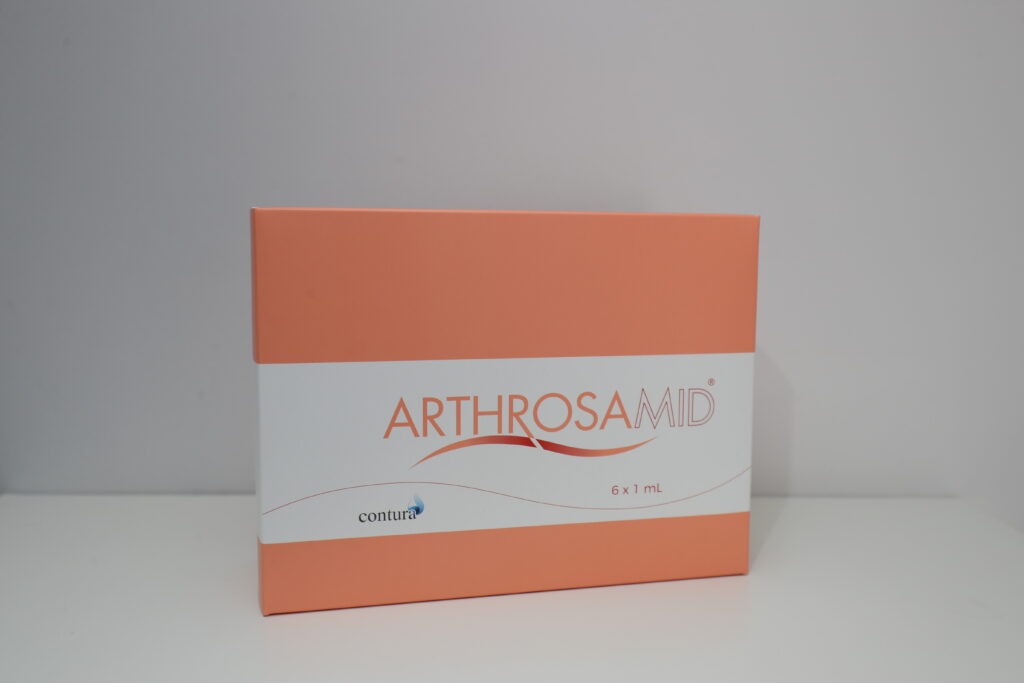
Arthrosamid® is a relatively new and specialised injectable treatment that is licensed specifically for knee osteoarthritis.
Unlike corticosteroid injections, which work by reducing inflammation, Arthrosamid® is a non-biodegradable hydrogel that integrates into the synovial lining of the knee joint. By helping to support the joint lining, it may reduce pain and improve function for an extended period, with clinical studies demonstrating benefits lasting up to three years in many patients.
Because it is a specialist treatment, Arthrosamid® is not suitable for everyone. There are strict inclusion and exclusion criteria, and a thorough clinical assessment is required before treatment is recommended.
Factors such as the severity and type of arthritis, previous treatments, overall knee health, age, and medical history all need to be considered.
It is not appropriate for inflammatory arthritis, active joint infection, people who have previously undergone knee replacement surgery, or certain other medical conditions.
Arthrosamid® is currently licensed for use in the knee onlyand isonly available through private healthcare providers.
While it is not intended to replace knee replacement surgery when that is clearly indicated, it can be an excellent option for carefully selected patients who wish to reduce pain, improve mobility and potentially delay surgery.
Can Ultrasound Guided Injections Really Help You Avoid Joint Surgery?
For many patients, yes.
The aim is not necessarily to avoid surgery forever, but to postpone it until the timing is right.
For example, you may wish to:
- Continue working comfortably.
- Stay active and maintain your fitness.
- Complete an important sporting event.
- Delay surgery until retirement.
- Avoid surgery while caring for family members.
- Improve your symptoms while losing weight before surgery.
If injections reduce pain enough to allow you to strengthen the muscles around the joint, improve your movement and return to activities you enjoy, they may successfully delay the need for surgery.
However, it’s important to highlight that injections are not a cure for arthritis.
If the joint continues to deteriorate and symptoms eventually become severe despite appropriate treatment, surgery may still become the best option.
Why Physiotherapy Is Essential
One of the biggest misconceptions is that an injection alone will solve the problem.
In reality, the best results come from combining injection therapy with expert physiotherapy guided rehabilitation.
Pain often leads people to move less, causing muscles to weaken, joints to stiffen and balance to deteriorate. This creates a cycle where movement becomes increasingly difficult.
By reducing pain, an injection creates a valuable window of opportunity to address these underlying issues.
At Wandsworth physiotherapist we can help you:
- Improve joint strength.
- Increase flexibility.
- Restore confidence in movement.
- Improve balance.
- Reduce stress on the affected joint.
- Return safely to activities you enjoy.
This combined approach often produces far better long-term outcomes than either treatment alone.
When Might Surgery Still Be the Best Option?
While injections can be highly effective, they are not appropriate for every patient.
Surgery may still be recommended if:
- Pain remains severe despite multiple conservative treatments.
- The joint has become significantly deformed.
- Walking distance is extremely limited.
- Night pain is persistent.
- Daily activities are no longer manageable.
In these situations, delaying surgery unnecessarily may actually prolong discomfort and reduce quality of life.
An experienced musculoskeletal clinician can help you decide when the balance has shifted from conservative management towards surgical treatment.
How Do You Know Which Treatment Is Right for You?
Every patient is different.
The most appropriate treatment depends on several factors, including:
- The severity of your arthritis.
- Which joint is affected.
- Your age and activity level.
- Your overall health.
- Your lifestyle and personal goals.
- Previous treatments you’ve already tried.
At Wandsworth Physiotherapy Clinic, every patient undergoes a detailed assessment before any injection is recommended.
We consider not only your scan results but also how your symptoms affect your daily life and what you hope to achieve.
For some people, rehabilitation alone is the best option. For others, combining physiotherapy with an ultrasound-guided injection can provide the pain relief needed to restore movement and delay surgery. Where symptoms remain severe despite appropriate treatment, we can also advise when referral to an orthopaedic surgeon may be the most appropriate next step.
Take the Next Step
If osteoarthritis is affecting your quality of life, surgery is not always the only answer.
For many people, carefully selected injection therapy combined with expert physiotherapy offers an effective way to reduce pain, improve function and continue enjoying an active lifestyle.
Whether your goal is to stay active, postpone joint replacement or simply walk more comfortably again, an expert assessment can help you understand which treatment options are most appropriate for you and whether injections could play a role in helping you manage your arthritis.
References
National Institute for Health and Care Excellence (NICE) (2022) Osteoarthritis in over 16s: diagnosis and management (NG226). London: NICE.
Kolasinski, S.L., Neogi, T., Hochberg, M.C., et al. (2020) ‘2020 American College of Rheumatology. Guideline for the Management of Osteoarthritis of the Hand, Hip, and Knee’, Arthritis Care & Research, 72(2), pp. 149–162.
Bannuru, R.R., Osani, M.C., Vaysbrot, E.E., et al. (2019) ‘OARSI Guidelines for the Non-Surgical Management of Knee, Hip and Polyarticular Osteoarthritis’, Osteoarthritis and Cartilage, 27(11), pp. 1578–1589.
Arden, N.K., Perry, T.A., Bannuru, R.R., Bruyère, O., Cooper, C., Haugen, I.K., Hochberg, M.C., McAlindon, T.E., Mobasheri, A. and Reginster, J.Y., 2021. Non-surgical management of knee osteoarthritis: comparison of ESCEO and OARSI 2019 guidelines. Nature Reviews Rheumatology, 17(1), pp.59-66.