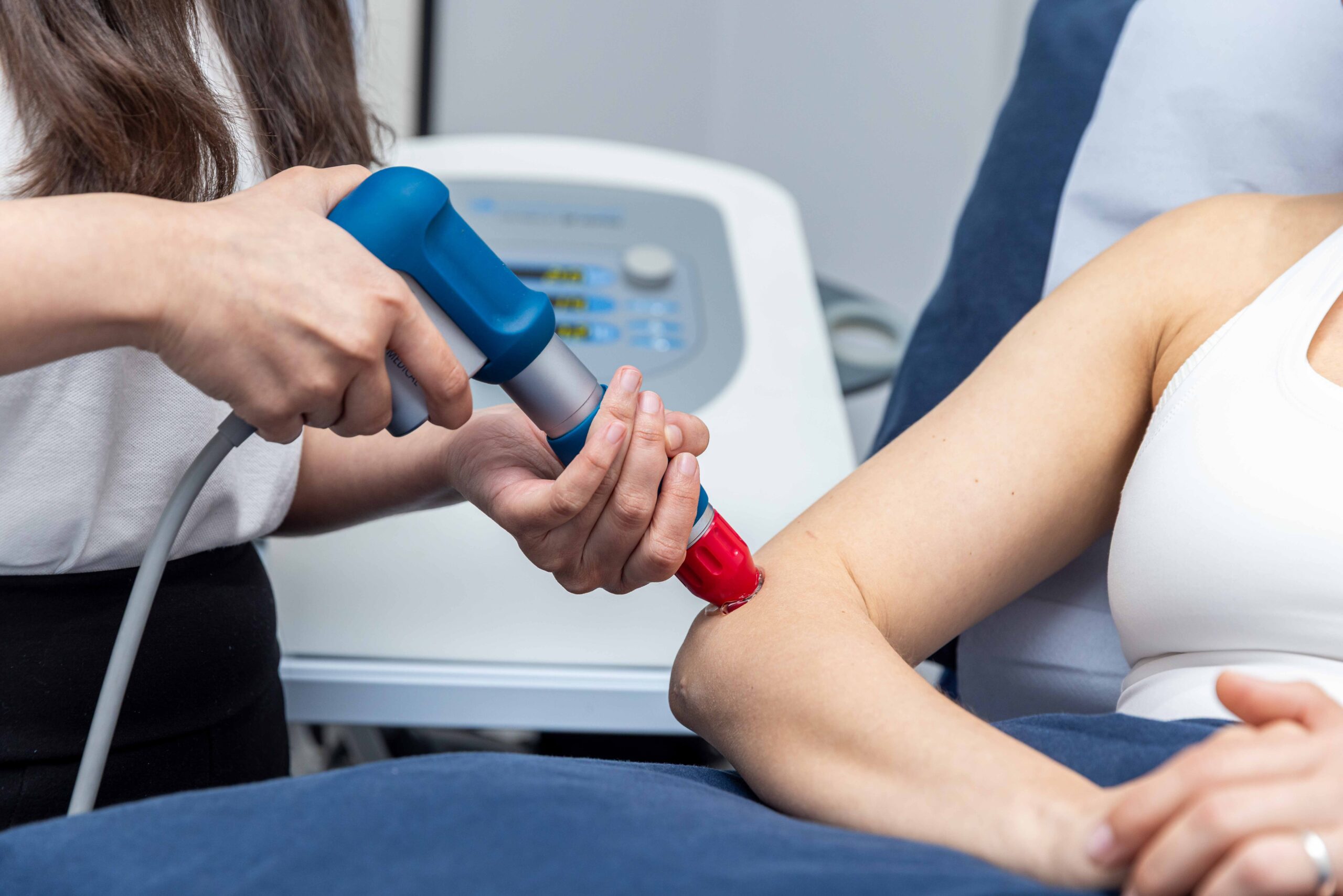
At Wandsworth Physiotherapy & Osteopathy we provide state-of-the-art shockwave therapy to treat stubborn tendon, muscle, and soft tissue problems across our Wandsworth Town, Putney, Clapham Junction, Battersea Nine Elms and Chelsea clinics. Shockwave therapy (ESWT) uses acoustic waves to stimulate healing, reduce pain, and improve mobility when exercise and manual therapy alone may not be enough.
We are proud to now offer both radial and focused shockwave therapy – allowing us to choose the most effective treatment for your condition. Shockwave is best used after an appointment with an ultrasound scan so the injured tissues can be evaluated and then targetted with treatment.
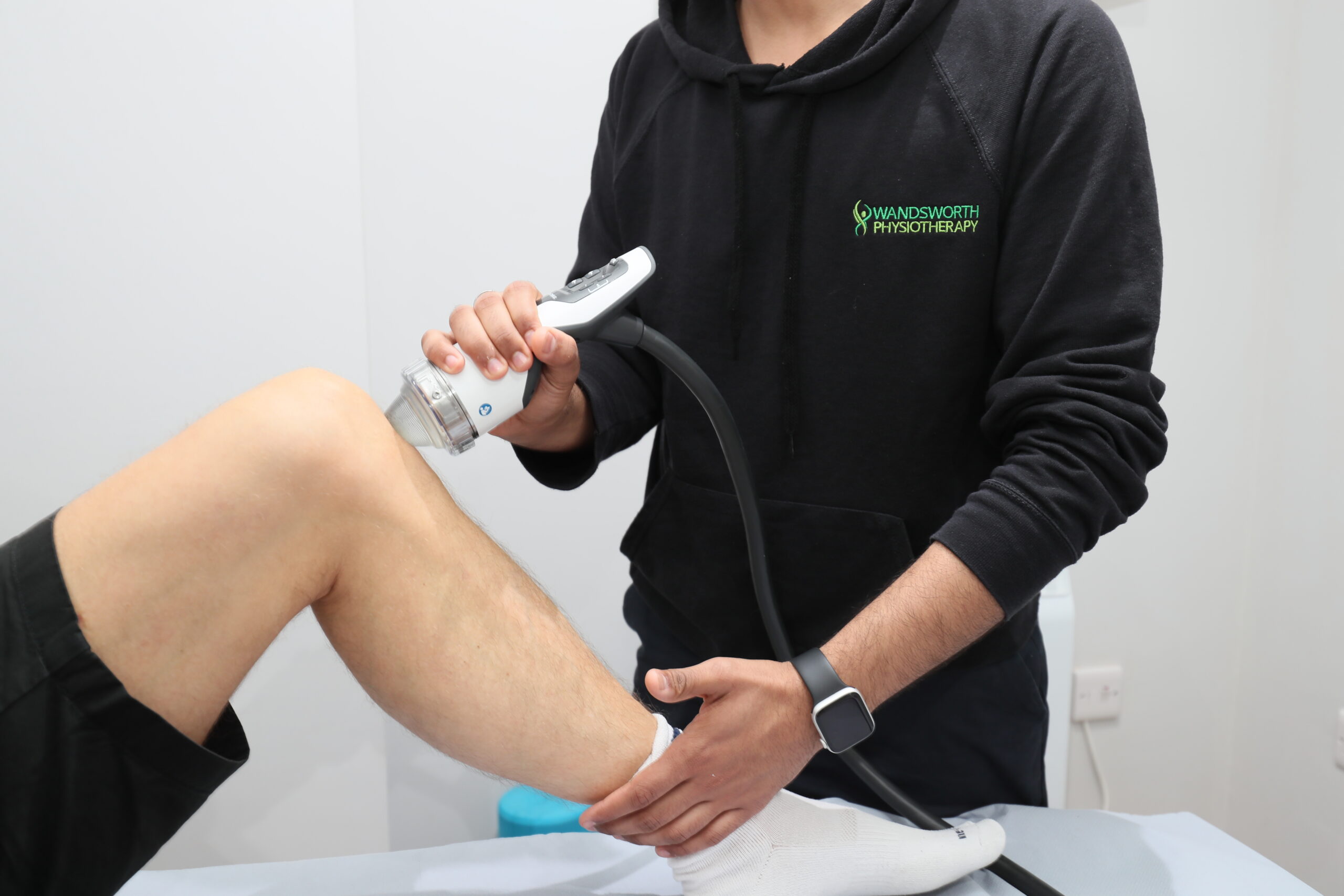
Most patients require 3–6 sessions of radial or focused shockwave therapy spaced about a week apart. Focused shockwave may require fewer sessions due to its precision and energy delivery. Your physiotherapist will discuss the right number of sessions for your condition during your assessment.
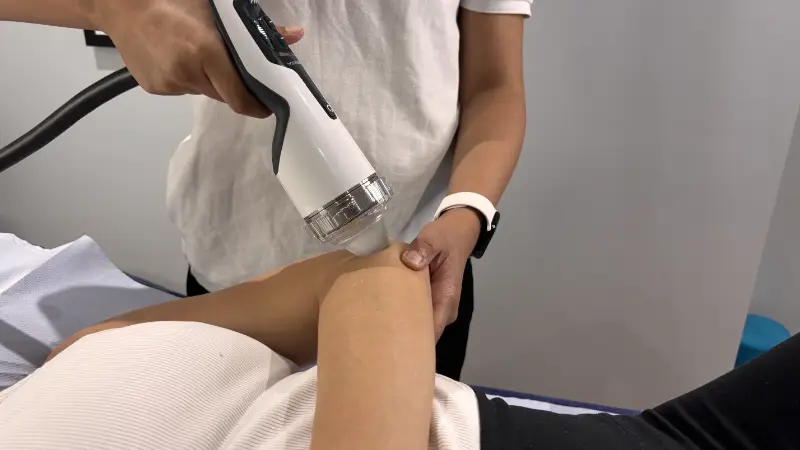
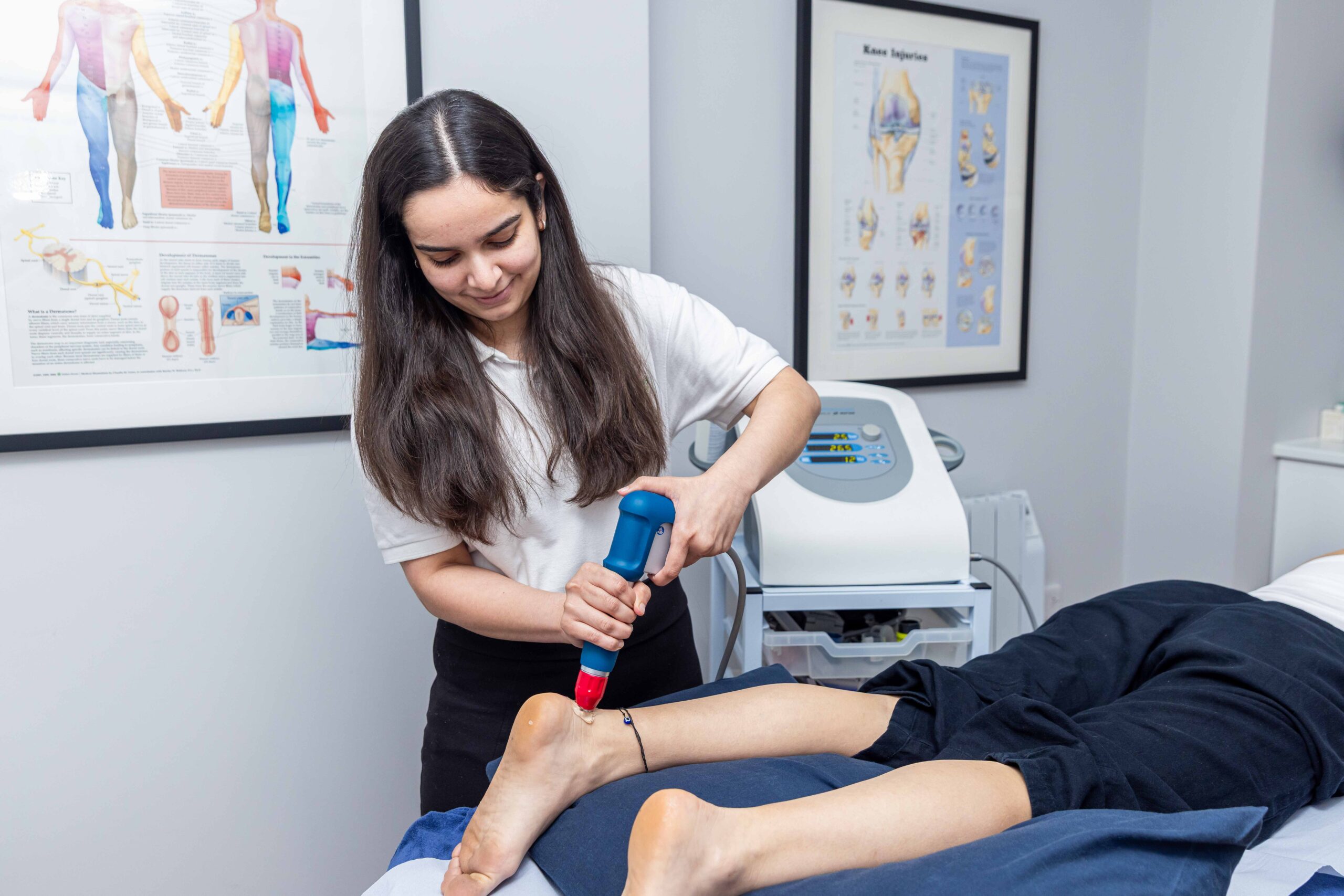
Shockwave therapy is a non-invasive treatment that uses sound wave pulses to stimulate the body’s natural healing response in chronic tendon and soft tissue injuries. It’s typically used once symptoms haven’t responded to rest, exercise or other conservative treatment on their own.
Our shockwave therapy service always pairs treatment with a full assessment and rehabilitation programme, rather than using it as a standalone fix.
Our article on the essentials of focused shockwave therapy explains how the treatment works on a tissue level for conditions like these.
Not always, but a diagnostic ultrasound scan can be genuinely useful where the diagnosis isn’t clear-cut or symptoms have been going on for a long time. Ultrasound lets your clinician view the tendon in real time and confirm exactly what’s being treated before starting shockwave.
In most cases, yes — aside from avoiding load on the treated area for roughly 24 hours after each session. Staying appropriately active is usually part of recovery rather than something to avoid, though your physiotherapist will adjust your training load as treatment progresses. This is a key focus for active patients attending our Running Injury Clinic, where identifying and correcting the cause of an injury sits alongside treatment.
Yes, depending on the diagnosis. We often combine shockwave with ultrasound imaging, structured rehabilitation and, where appropriate, ultrasound guided injections as part of a broader treatment plan — the right combination depends entirely on what’s identified during your assessment.
For specific shoulder conditions — particularly calcific tendinopathy and long-standing rotator cuff problems — shockwave is sometimes recommended as part of a wider treatment programme. Our Shoulder Clinic can advise whether it’s a suitable option for your specific shoulder diagnosis.


 Trustindex verifies that the original source of the review is Google.
 Trustindex verifies that the original source of the review is Google.
 Trustindex verifies that the original source of the review is Google.
 Trustindex verifies that the original source of the review is Google.
 Trustindex verifies that the original source of the review is Google.
 Trustindex verifies that the original source of the review is Google.
 Trustindex verifies that the original source of the review is Google.
 Trustindex verifies that the original source of the review is Google.
 Trustindex verifies that the original source of the review is Google.
How can we assist?