
Does this describe you?
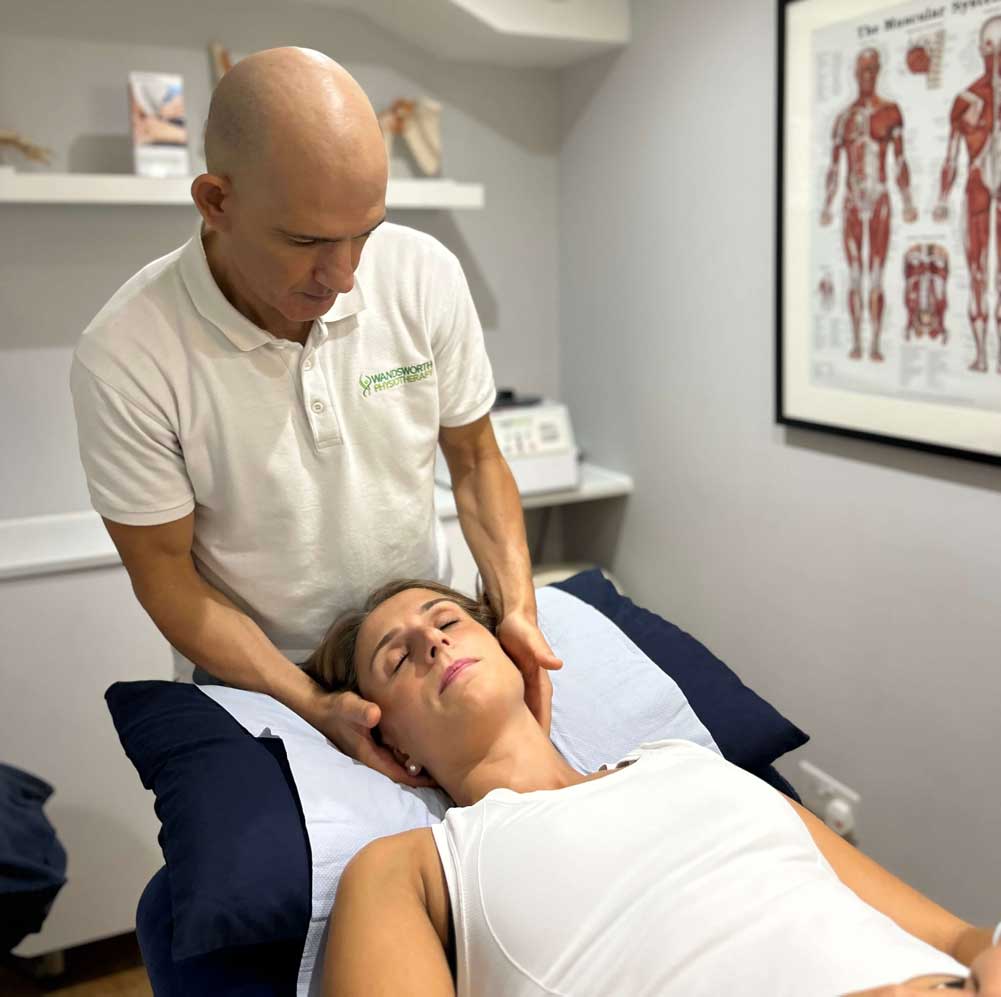
At Wandsworth physiotherapy and osteopathy our highly experienced temporomandibular joint (TMJ) physiotherapy team treat people just like you and help them get back to what they love doing without further jaw pain.
Temporomandibular joint disorders (TMD) refers to a range of conditions affecting the TMJ itself, which connects your jawbone to your skull. This disorder can cause discomfort, pain and limitations in jaw movement. This can impact daily activities such as eating, speaking and even sleeping.
Broadly there are three classifications of TMD
The temporomandibular joint is a complex structure comprised of the jawbone (mandible), temporal bone of the skull and a disc that cushions the joint. Muscles surrounding the joint, including the masseter, temporalis and pterygoid muscles, play a crucial role in jaw movement and stability.
The TMJ functions through a combination of hinge and sliding motions, allowing for the opening, closing, and side-to-side movements of the jaw. The coordinated action of muscles, ligaments and the joint itself enables smooth and pain-free jaw function. Our expert TMJ physiotherapy team can assess and treat your TMJ pain.
TMJ disorders can arise from various factors, including:
Direct impact to the jaw, such as from a fall or blow, can damage the TMJ and surrounding structures.
Persistent clenching or grinding of teeth, often during sleep, can exert excessive pressure on the TMJ, leading to inflammation and discomfort in the joint. It can also lead to hypertrophy of the muscles of mastication – predominantly the masseter muscle. This becomes enlarged and painful.
The relationship between the jaw, head and neck is well established in the research literature and central to our approach at Wandsworth Physiotherapy. The neck, head, and jaw function as an interconnected complex - dysfunction in the upper cervical vertebrae can directly contribute to TMJ pain and vice versa. Studies have shown that patients with TMD have a significantly higher prevalence of cervicogenic headache than the general population, and that treating the cervical spine alongside the TMJ produces better outcomes than treating the jaw in isolation. For this reason, our TMJ physiotherapists routinely assess and treat the upper cervical spine as part of every TMJ assessment, ensuring that the full picture of your pain is understood and addressed.
Tension and stress can contribute to jaw clenching and muscle tightness, exacerbating TMJ symptoms.
Conditions such as osteoarthritis or rheumatoid arthritis can affect the TMJ, leading to inflammation, pain and stiffness.

Symptoms of TMJ disorder may vary from person to person but commonly include:
At our TMJ physiotherapy clinic treatment for TMJ disorder aims to alleviate symptoms, improve jaw function and address underlying causes. Here are some common treatment modalities:
Simple self-care techniques can often provide relief from mild TMJ symptoms. These may include applying ice packs to the jaw, practicing stress-reduction techniques, and avoiding hard or chewy foods.
Over-the-counter pain relievers such as ibuprofen or paracetamol can help alleviate pain and inflammation associated with TMJ disorder. In some cases, muscle relaxants or anti-anxiety medications may be prescribed to reduce muscle tension and stress.
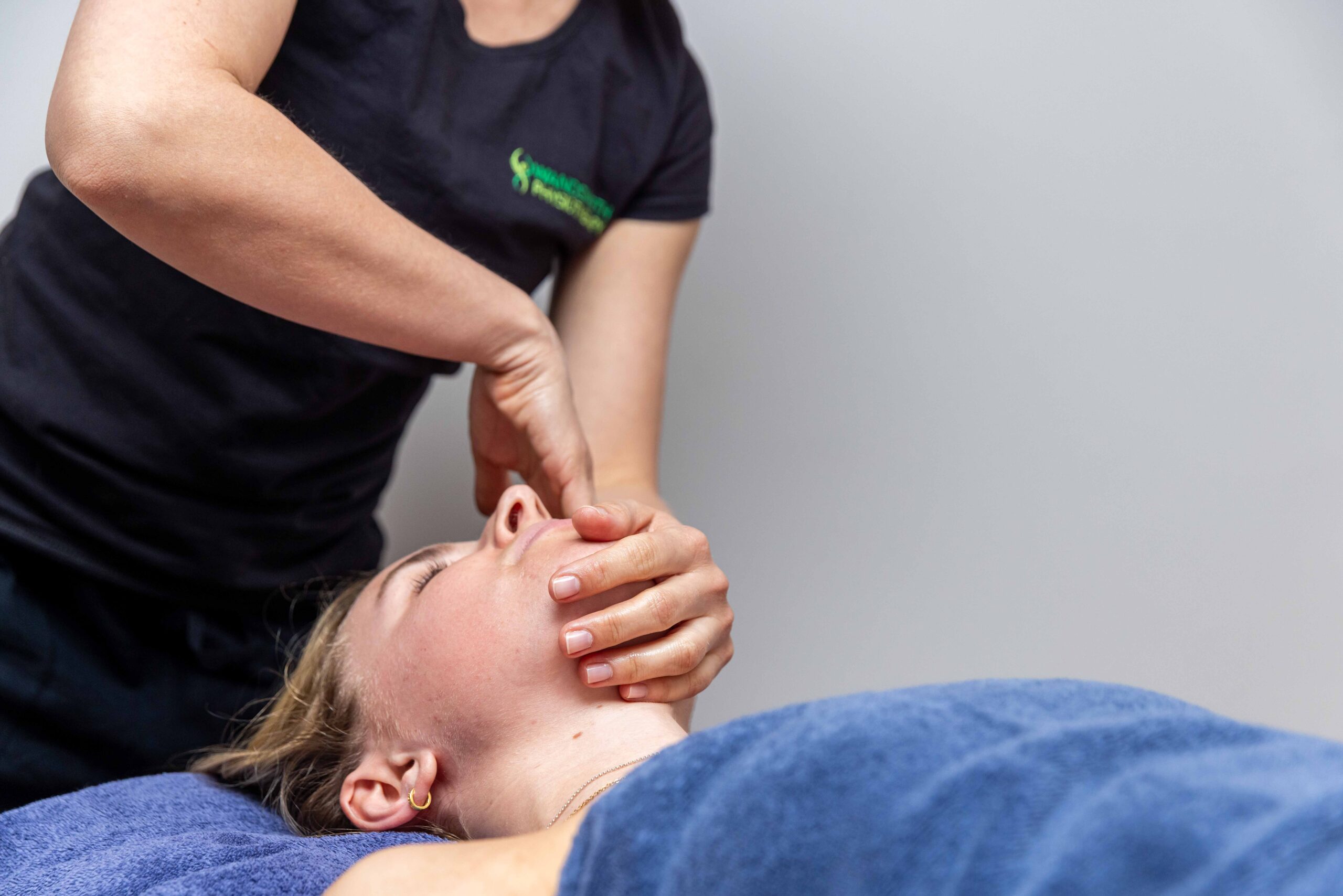
A TMJ physiotherapy plan includes the design of a personalised exercise program to strengthen jaw muscles, improve range of motion, and promote relaxation. Manual therapy techniques such as massage, acupuncture and joint mobilisation may also be utilised to alleviate pain and stiffness. Osteopathy may also be beneficial for TMD.
At our TMJ physiotherapy clinic we offer botox treatment. This is a muscle relaxant that can be injected into the masseter and temporalis muscles to relax them for a period of a few months. This will decrease their strength and can take pressure out of the TMJ allowing the pain to settle down.
If your TMJ disorder is related to dental issues such as misalignment or bruxism, your dentist may recommend treatments such as orthodontic work, occlusal splints (mouth guards), or dental restorations to correct bite abnormalities and reduce jaw strain. Our expert TMJ physiotherapy team can work with your dentist and organise the right referrals for you.
Trustindex verifies that the original source of the review is Google. I had back pain (which I initially thought was hip pain). My pain subsided with the exercises prescribed, and was a massive fan of Nuzhat Shaikh because she responded positively to my curiosity about human anatomy. I feel confident that I can manage my exercise load without aggravating my back, because I understand the signals my body is giving me better!Trustindex verifies that the original source of the review is Google. I had a great experience with my physiotherapy sessions. Shreya was knowledgeable, attentive, and tailored the treatment to my specific needs. I noticed real improvement after just a few sessions. Highly recommend for anyoneTrustindex verifies that the original source of the review is Google. I sought help from Wandsworth Physiotherapy (Khushboo in particular) to treat osteoarthritis in my knee. I was pleasantly surprised by how quickly the treatment took to start working. Khushboo customised her treatment and exercises to my capabilities and abilities. All in all a very positive experience. I would highly recommend WP.Trustindex verifies that the original source of the review is Google. Amazing sports massage! Helped with my ITB issues before a half marathon. The staff were lovely and very knowledgeable - would high recommend!Trustindex verifies that the original source of the review is Google. I am currently seeing Prarthi for slipped disc and sciatica related pain. Every session makes a difference and 3 weeks in and my pain and overall mobility is much better. Highly recommend.Trustindex verifies that the original source of the review is Google. Had the best session with Andreas. He’s understood my back pain issues and has suggested a treatment plan that is already paying off after just one session.Trustindex verifies that the original source of the review is Google. Helped fix my lower back pain last year, highly recommend.Trustindex verifies that the original source of the review is Google. I recently had a physio appointment with Shreya. She was very warm, friendly and professional. She managed to diagnose an issue with my shoulder, which I have had for many years. Following the suggested exercises there has already been a noticeable improvement.Google rating score: 4.9 of 5, based on 396 reviewsVerified by TrustindexTrustindex verified badge is the Universal Symbol of Trust. Only the greatest companies can get the verified badge who has a review score above 4.5, based on customer reviews over the past 12 months. Read more
How can we assist?