Red light therapy is rapidly becoming one of the most in-demand treatments across both aesthetic and physiotherapy clinics. Known for its ability to support skin health, reduce pain, and accelerate healing, it offers a powerful, non-invasive solution for a wide range of conditions.
At Wandsworth Physiotherapy, red light therapy is increasingly being integrated into treatment plans to enhance recovery, improve outcomes, and support long-term wellbeing.
But what exactly is red light therapy, and why is it so effective?
What is red light therapy?
Red light therapy, also referred to as photobiomodulation, uses specific wavelengths of light to stimulate cellular activity. Unlike more aggressive treatments that create controlled damage to trigger repair, red light therapy works by enhancing the body’s natural healing processes.
When the light penetrates the skin and underlying tissues, it is absorbed by the mitochondria, the part of the cell responsible for producing energy. This interaction boosts the production of ATP (adenosine triphosphate), allowing cells to function more efficiently.
The result? Faster repair, reduced inflammation, and improved tissue health.
Understanding wavelengths in light therapy
A key factor in the effectiveness of red light therapy is the wavelength used. Different wavelengths penetrate the body at different depths, which is why this treatment is so versatile.
- Red light (630–660nm): Targets the skin and superficial layers, making it ideal for aesthetic treatments.
- Near-infrared light (810–880nm): Penetrates deeper into muscles, joints, and connective tissues, making it highly effective in physiotherapy.
Clinically, combining both wavelengths often delivers the best results, as it allows practitioners to treat both surface-level concerns and deeper structural issues simultaneously.
What does it do?
Red light therapy works at a cellular level to enhance the body’s natural healing response. Its key benefits include:
- Increased cellular energy production
- Improved circulation and oxygen delivery
- Reduced inflammation
- Stimulation of collagen production
- Accelerated tissue repair
These effects make it highly adaptable, with applications ranging from skin rejuvenation to injury rehabilitation.
Red light therapy in aesthetics
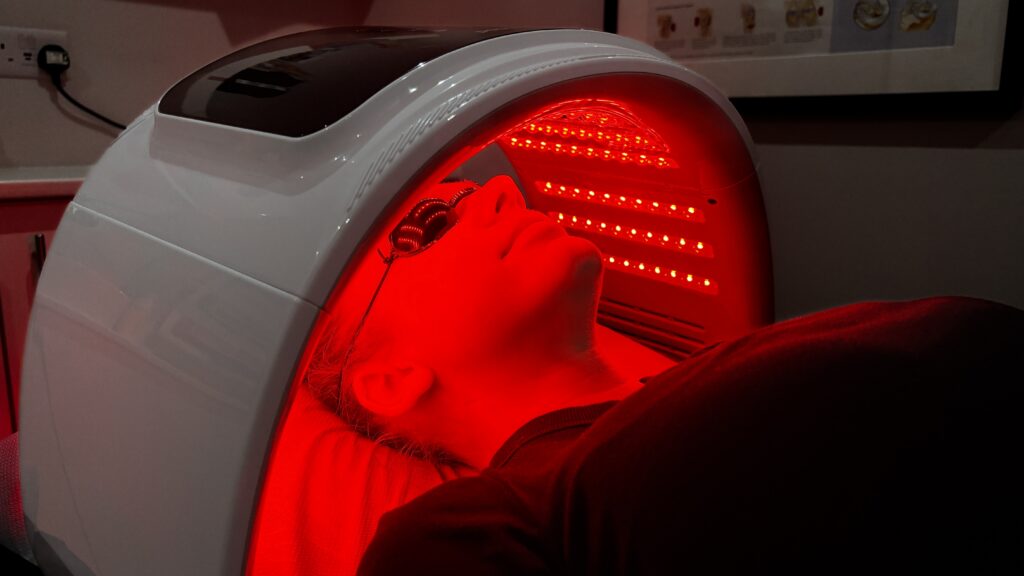
In aesthetic clinics, red light is widely used as a supportive and restorative treatment. Rather than replacing more advanced collagen stimulating procedures such as micro needling or Profhilo, it enhances results and improves overall skin health.
Collagen production and skin rejuvenation
One of the primary benefits is its ability to stimulate collagen production. This helps to:
- Improve skin firmness
- Reduce the appearance of fine lines
- Enhance overall skin texture
Over time, consistent red light therapy treatments can lead to stronger, healthier, and more resilient skin.
Post-treatment recovery
Red light therapy is commonly used after procedures such as microneedling, chemical peels, and laser treatments. It helps to:
- Reduce redness and irritation
- Accelerate healing
- Strengthen the skin barrier
This makes it an ideal add-on treatment in any advanced aesthetic clinic. However, we caution our customers not to use it straight away after procedures and the finer detail of when and how to use it is given post treatment.
Acne and inflammation
For clients dealing with acne or sensitive skin, light therapy provides a gentle yet effective solution. It helps calm inflammation and supports the skin’s natural healing processes without causing further irritation. Either red or blue light might be useful in the situation.
Skin tone and radiance
By improving circulation and promoting cellular turnover, light therapy contributes to a brighter, more even complexion. It is particularly effective as part of a long-term skin maintenance plan.
Red light therapy in physiotherapy
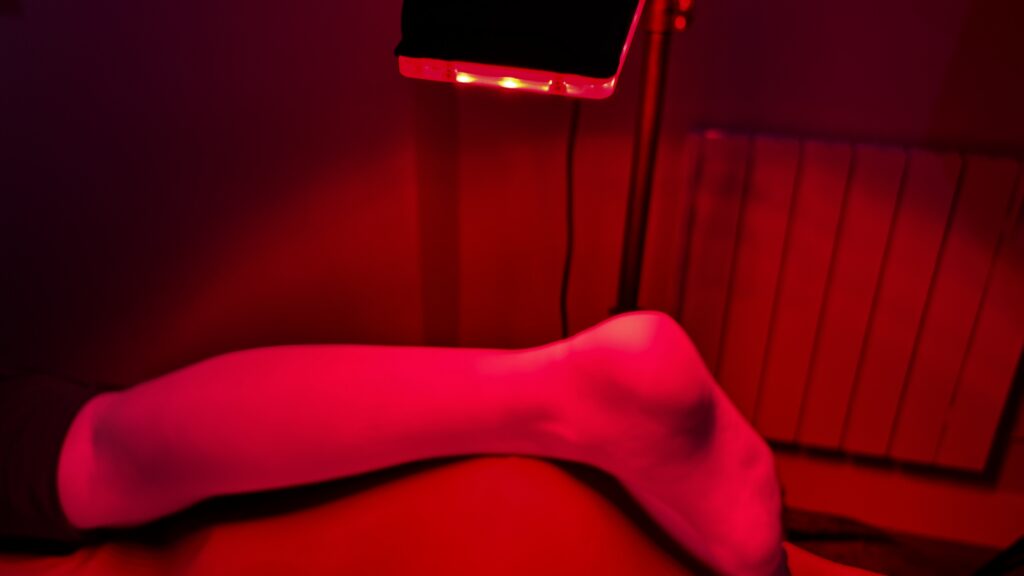
In physiotherapy, red light plays a more functional role, supporting recovery, reducing pain, and improving mobility. At clinics such as sports injury clinic, it is often used alongside manual therapy and exercise rehabilitation to optimise results.
Red Light Therapy and pain relief
Red light therapy is highly effective for pain management. It works by reducing inflammation and improving circulation, helping to relieve:
- Muscle soreness
- Joint pain
- Chronic conditions such as tendon injuries
This makes it a valuable option for patients looking for non-invasive pain relief. Combined with sauna and other heat treatments chronic muscle and joint pain might be managed with less pain medication.
Reducing inflammation
Inflammation is a key factor in many injuries and chronic conditions. The red light helps regulate the inflammatory response, supporting faster and more efficient healing.
It is particularly useful in:
- Acute injuries
- Overuse conditions
- Post-exercise recovery
Bruising and soft tissue healing
Red light therapy can significantly speed up the healing of bruises and soft tissue injuries. By improving blood flow and lymphatic drainage, it helps the body clear damaged tissue more quickly. This is why it is often used in both physiotherapy and post-aesthetic treatment care.
Tendons, ligaments, and collagen repair
Beyond skin, near-infrared light therapy also stimulates collagen production in deeper connective tissues. This improves the strength and resilience of tendons and ligaments, making it an important tool in injury rehabilitation. Patients recovering from sports injuries or long-term conditions can benefit significantly from this approach.
Mobility and recovery
By reducing pain and stiffness, red light therapy helps improve range of motion and supports faster return to normal activity. When combined with targeted rehabilitation programmes, such as those offered in classes, it can significantly enhance recovery outcomes.
Conditions that red light therapy can help with
Red light therapy is suitable for a wide range of conditions across both aesthetics and physiotherapy.
Aesthetic applications:
- Fine lines and wrinkles
- Loss of skin elasticity
- Acne and inflammatory skin conditions
- Uneven skin tone
- Post-procedure recovery
Physiotherapy applications:
Chronic pain conditionssuch as those offered in sports injury clinic, red light therapy can significantly enhance recovery outcomes.
- Muscle strains and soreness
- Joint pain and stiffness
- Tendon and ligament injuries
- Bruising and swelling
- Chronic pain conditions
Why red light therapy is growing in popularity
The rise of red light therapy reflects a broader shift towards non-invasive, evidence-based treatments that support the body rather than disrupt it. Its ability to deliver consistent results without downtime makes it appealing to both practitioners and patients. Whether used for skin rejuvenation or injury recovery, red light therapy offers a safe, effective, and versatile solution.
For those interested in the scientific research behind red light therapy, you can explore clinical insights and emerging evidence here
Final thoughts
Red light therapy is not a miracle cure – but it is a powerful tool when used correctly. In aesthetics, it supports healthier, more resilient skin. In physiotherapy, it accelerates healing and reduces pain.
At Wandsworth Physiotherapy, integrating red light therapy into treatment plans allows practitioners to deliver more comprehensive care, helping patients recover faster and maintain better long-term outcomes.
As awareness continues to grow, red light therapy is set to become a cornerstone treatment across both industries, bridging the gap between beauty and rehabilitation in a way few other technologies can.