
Prostate health isn’t exactly the topic most men bring up over coffee. In fact, many avoid thinking about it altogether – usually out of fear, awkwardness or not really knowing what’s normal and what’s not. But with prostate issues being incredibly common and prostate cancer being one of the most frequently diagnosed cancers in men, understanding this small gland can make a massive difference to long-term health.
This article draws on insights shared by physiotherapist and men’s health specialist Joe Milios, whose work has helped thousands of men with their prostate health, recover pelvic, urinary and sexual function after prostate issues or surgery. Here’s what every man should know.
Prostate Health: What a “Normal” Prostate Looks Like
A healthy prostate is about the size of a walnut, containing roughly 35–40 ml of tissue. As men age, it’s completely normal for the prostate to grow gradually. That growth isn’t necessarily dangerous – but it can affect urinary flow and sexual function over time.
Why Men Avoid Screening and Why They Shouldn’t
The biggest barrier? Many men think a prostate check automatically means a digital rectal exam, something most aren’t thrilled about. Today, all things regarding prostate health have moved on. Screening usually begins with a PSA blood test, which is quick and non-invasive. PSA isn’t perfect – some cancers don’t increase PSA levels – but it’s an excellent starting point and widely used worldwide.
If a PSA test comes back high, the typical pathway is:
- Repeat the test after a few weeks
- Referral to a urologist if it’s still elevated
- MRI scanning to refine risk
- Targeted biopsy, only if needed
And importantly: Not every man with prostate cancer needs surgery. Many low-risk cancers are managed safely with active surveillance, especially in older men.
Spotting the Early Signs (Or Lack of Them)
One of the tricky things about prostate cancer is that it usually has no early symptoms. So observing your prostate health can be tricky. When symptoms do appear, they’re often due to benign prostate enlargement or pelvic floor issues, not cancer.
Things to watch for include:
- Stopping and starting the urine stream
- A weaker flow
- Getting up at night more often than usual (normal is once per night)
- A feeling of incomplete bladder emptying
By age 40–50, many men notice at least one urinary change simply from normal prostate enlargement. Erectile dysfunction is also common in this age group and often linked to the pelvic floor as much as hormones or circulation.
A useful at-home prostate health check: Try stopping and starting your urine flow. If you can’t, your pelvic floor may need some attention.
Prostatitis and Pelvic Pain, Not Always an Infection
Prostatitis is one of the most misunderstood prostate conditions. It can be:
- Acute bacterial infection
- Low-grade or chronic infection
- Chronic pelvic pain syndrome (CPPS)
- Pudendal neuralgia
- Or even asymptomatic, found during routine testing
Only a minority of cases respond to antibiotics. The vast majority are actually pelvic floor–related, often linked to tension, overactivity, or past trauma to the pelvis, coccyx, or sacroiliac joints. This is extremely common in men who’ve played impact sports.
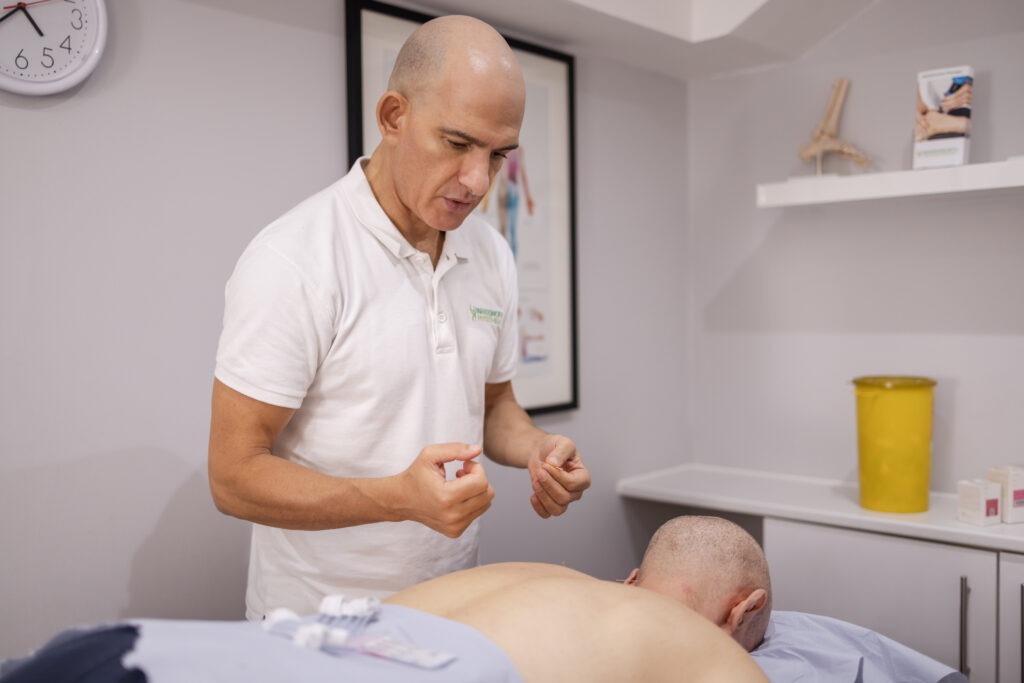
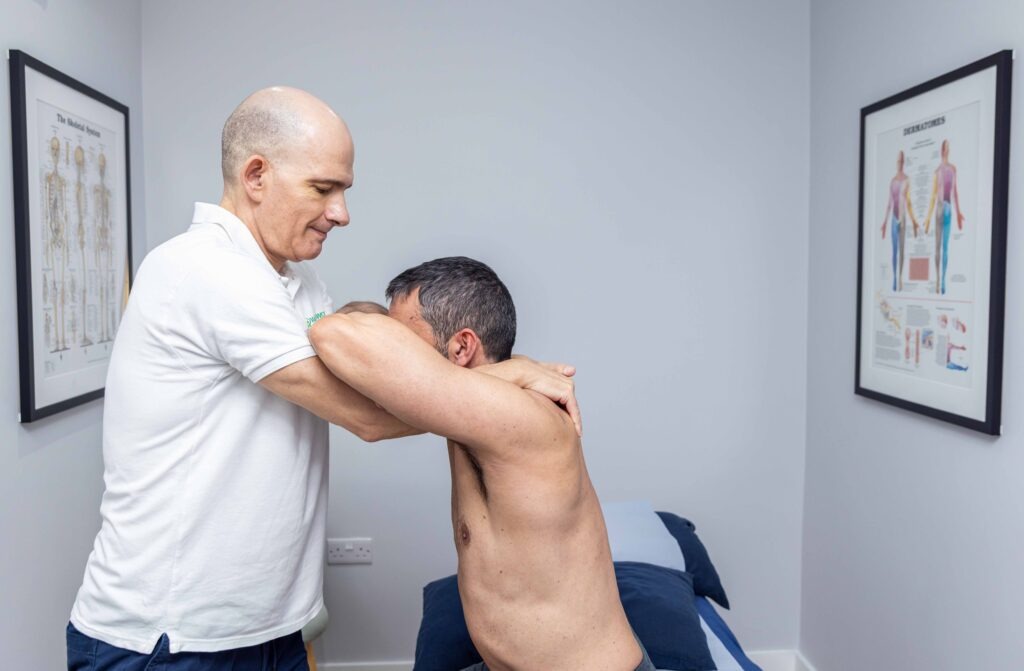
Specialised physiotherapy focusing on the pelvic floor, hips, lumbar and thoracic spine, and sacroiliac joints can be transformative.
Pre-Op Preparation: Why Pelvic Floor Training Matters
If prostate surgery is needed, preparation makes all the difference. Joe Milios has developed a pelvic floor protocol shown to significantly improve urinary and sexual outcomes. Ideally started 6–12 weeks before surgery, it involves:
- Rapid contractions: 6 sets of 10
- Long holds: 6 sets of 10 (10 seconds on, 10 seconds off)
That’s around 120 total contractions, performed daily and progressed from lying to sitting to standing as control improves.
Weight Loss Helps Too for Prostate Health
Losing 5–10 kg of excess body fat before surgery can reduce intraoperative trauma. This is because fatty tissue around the pudendal nerve and seminal vesicles makes delicate structures harder to identify during surgery.
Post-Surgery Recovery: What Works Best
Regaining continence and erectile function after prostate surgery is a journey, and every man’s timeline is different. Only a small percentage regain erections in the first six months, but structured rehab dramatically improves the odds.
Most urologists will implement a staged plan:
- Daily low-dose Cialis once the catheter is removed
- Vacuum erection device (VED) around the four-week mark
- Focused shockwave therapy around six months post-op, once PSA tests are clear
Considering focused shockwave – 6 sessions are usually quite effective for vaascular related ED, however post prostate surgery ED and pelvic floor dysfunction may require between 10 and 15 sessions in some individuals.
And of course: Pelvic floor training continues to be essential, especially in the first three months. Men who commit to pre- and post-operative pelvic floor programs consistently show the best continence and sexual recovery outcomes.
Prostate Health: Common Post-Surgical Complications
Chronic Pelvic Pain Syndrome
Around 1 in 6 men can develop post-operative pelvic pain. This is often due to a hypertonic pelvic floor – muscle that’s too tight to function properly.
Symptoms may include:
- Painful urination
- Hesitancy
- A “stuck” feeling in the pelvic floor
Ultrasound can identify abnormal muscle activity, and treatment focuses on breathing, relaxation, mobility, and down-training (not strengthening) alongside focused shockwave therapy.
Peyronie’s Disease
Scar tissue in the penis is another possible complication after prostate surgery.
- In the early stage, ultrasound therapy can help around 70% of men.
- Once calcified plaques form, focused shockwave therapy is more effective and often used alongside pelvic rehab.
- Shockwave also reduces pudendal nerve sensitivity and helps relax overactive pelvic floor muscles.
It can also be useful for vascular or diabetic erectile dysfunction.
MYTH vs FACT: The Truth About Prostate Health
Myth 1: “Normal PSA means I definitely don’t have prostate cancer.”
Fact: PSA is helpful, but not perfect. A normal PSA doesn’t completely rule out cancer.
Myth 2: “You must have a digital rectal exam before any prostate test.”
Fact: Screening usually starts with a PSA blood test. DRE is used selectively.
Myth 3: “If you’re diagnosed with prostate cancer, you’ll need surgery.”
Fact: Many men with low-risk cancer choose active surveillance instead.
Myth 4: “Urinary symptoms mean cancer.”
Fact: Most urinary symptoms are due to benign enlargement or pelvic floor dysfunction.
Myth 5: “Pelvic floor exercises are just for women.”
Fact: Men have a pelvic floor too – and it’s crucial for bladder and sexual function.
Myth 6: “Shockwave therapy doesn’t help after prostate surgery.”
Fact: Shockwave can be extremely useful for erectile dysfunction, pelvic pain, pudendal nerve sensitivity, Peyronie’s, and hypertonic pelvic floor muscles especially around six months post-op.
Myth 7: “If erections don’t return quickly after surgery, they never will.”
Fact: Recovery can continue for up to two years, especially with structured rehab.
Myth 8: “Pain after prostate surgery means something went wrong.”
Fact: Post-op pelvic pain is common and usually related to muscle overactivity, not surgical error.