What is Erectile Dysfunction (ED)?
Erectile Dysfunction (ED), sometimes still called ‘impotence’, refers to the persistent inability to achieve or maintain an erection sufficient for satisfactory sexual activity. It’s not a disease in itself, but rather a symptom of underlying physical, psychological, or mixed causes.
ED, is just one of a number of men’s pelvic health problems. It can affect men of all ages, though it becomes more common with age, and it can stem from a range of contributing factors, including vascular problems (e.g. reduced penile blood flow), nerve issues, hormonal imbalances, muscular or pelvic floor dysfunction, stress, anxiety, or psychological factors.
Who Suffers from ED? (And Why It’s More Common Than We Think)
- Middle-aged and older men: With increasing age, vascular health may wane, and pelvic floor muscle strength or tone may change.
- Men with chronic health issues: Conditions like diabetes, hypertension or atherosclerosis can impair blood flow or nerve conduction, contributing to ED.
- Men with pelvic floor dysfunction or muscletone imbalance: Weak pelvic floor muscles, poor coordination, or conversely overly tight/overactive pelvic floor muscles may impair the muscular support needed for normal erectile function.
- Men recovering from surgery: For example, after prostate surgery, pelvic floor and vascular or nerve dysfunction may combine to affect sexual function. Physiotherapy is often recommended in these scenarios.
- Younger men under stress or with lifestyle factors: Though less common, younger men, especially those with pelvic-pain conditions, high stress or pelvic floor tension, may also experience ED.
In short: Erectile Dysfunction can hit a wide spectrum of men. That’s why it’s important to approach it holistically.
How Traditional Physiotherapy Can Help
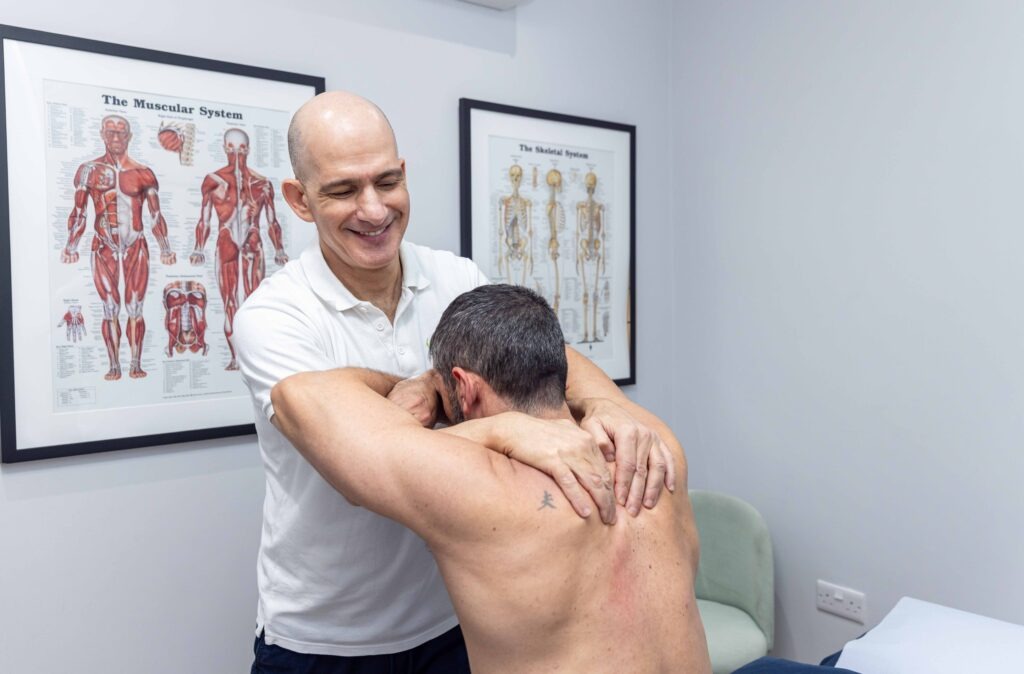
Physiotherapy, especially when delivered by a specialist in men’s pelvichealth, can play a central role in the non-pharmacological, non-surgical management of ED.
Below are the main ways it can help:
Pelvic Floor & Core Strengthening
The pelvic floor muscles, including small but key muscles such as the ischiocavernosus and bulbospongiosus, play an important role in achieving and maintaining an erection. They help maintain penile rigidity, support vascular and nerve function, and contribute to ejaculation and orgasm.
A wellstructured pelvic floor muscle training (PFMT) programme, especially if supervised by an experienced physiotherapist, can:
- Improve muscle strength, endurance, and coordination.
- Help “trap” blood within the erectile tissue, supporting firmer, more sustained erections.
- Improve control during ejaculation and potentially help with related issues (e.g. premature ejaculation).
A randomised controlled trial, showed that men engaging in pelvic floor exercises and biofeedback saw significant improvements in erectile function after 3 and 6 months versus only lifestyleadvice alone.
Manual Therapy, Relaxation, and Muscle Tone Regulation
ED isn’t always about weak muscles; sometimes the pelvic floor is too tight or overactive, leading to restricted blood flow, nerve pressure or poor muscle coordination.
Physiotherapists can use:
- Manual therapy (soft tissue release, myofascial release) around the pelvic floor, hips, lower back and abdomen
- Breathing, posture and corestability work to improve muscle control and reduce undue tension
- Downtraining or relaxation techniques for overactive pelvic floor muscles (rather than just “more tightening”)
This approach can also target contributing issues such as poor posture, reduced hip/spine mobility, nerve irritation or chronic pelvic pain – all of which may influence sexual function.
Lifestyle, Stress Management, and Holistic Support for Erectile Dysfunction
Erectile Dysfunction is often more than a physical issue: stress, anxiety, poor circulation, sedentary lifestyle, and general health all play a part.
Physiotherapists can therefore help by:
- Providing tailored exercise and movement programmes to improve cardiovascular and pelvic health
- Offering advice on posture, breathing, relaxation and stress reduction, useful if performance anxiety or tension plays a role
- Educating about pelvic health and empowering men to selfmanage with home exercise programmes, rather than relying solely on medication or quick fixes.
A 2022 review of pelvic floor rehabilitation for sexual dysfunction concluded that physiotherapy (PFMT, manual therapy, muscletone modulation) can significantly improve Erectile Dysfunction and premature ejaculation, when tailored to the individual.
Advanced & Complementary Treatments: When Traditional Physio Alone Is Not Enough
For men with Erectile Dysfunction, especially vascular-related or mixed cause Erectile Dysfunction, additional treatments alongside more ‘classic’ physiotherapy, can add significant benefits.
Shockwave Therapy (LowIntensity Extracorporeal Shockwave Therapy, LiESWT)
- LowIntensity Extracorporeal Shockwave Therapy (LiESWT) uses lowintensity sound waves to stimulate tissue repair, angiogenesis (new blood vessel growth), and improved blood flow in penile tissue.
- When combined with pelvic floor physiotherapy and lifestyle changes, it can target both vascular and musculoskeletal contributors to Erectile Dysfunction, offering a more comprehensive treatment.
- For men with mild-to-moderate, vascular-related Erectile Dysfunction (who still have some natural erectile function), LiESWT may help restore more spontaneous erections or reduce reliance on medication.
Other Complementary or Supportive Services
Because ED is often multifactorial, effective management can benefit from a broader, multidisciplinary approach. Some relevant services include:
- Nutritional advice and lifestyle coaching – to improve overall vascular health, manage weight, support circulation, and reduce risk factors like diabetes or high blood pressure.
- Reflexology or stressreduction therapies – to help with relaxation, reduce performance anxiety, and improve overall wellbeing (though evidence is more anecdotal, some men find benefit when combined with physiotherapy).
- Psychosexual counselling or therapy – when psychological or emotional factors (stress, anxiety, past trauma) significantly contribute to Erectile Dysfunction.
- Pilates – to promote better posture, hip mobility, core and strength, to reduce muscular imbalances and support pelvic mechanics.
Why Physiotherapy Is a Great First Line Option
- Noninvasive & low risk: Unlike surgery or invasive procedures, pelvic floor physiotherapy and shockwave therapy are generally safe. PFMT can be done at home once learned.
- Addresses root causes, not just symptoms: Rather than just “patching up” Erectile Dysfunction with pills, physio tries to fix dysfunction in blood flow, muscle tone, nerve coordination, posture, lifestyle and stress, for longerterm benefit.
- Customisable and holistic: Physio can be tailored to whether the problem stems from weak muscles, overactive muscles, vascular issues, past surgery, or a mix. And can be combined with nutrition, stress management, and other therapies for a truly holistic approach.
- Sustainable and empowering: Patients learn exercises and lifestyle habits they can maintain, rather than relying indefinitely on medication or interventions.
A 2019 systematic review specifically found that pelvic floor muscle training (often with biofeedback) produced statistically significant improvements in erectile function 12 months after treatment.
A 2022 review further supports that combining PFMT, manual therapy and lifestyle advice is often more effective than exercises alone.
How We Do It at Wandsworth Physiotherapy
At Wandsworth Physiotherapy, our men’s pelvichealth service takes a comprehensive, patientcentred approach. We combine PFMT, manual therapy and shockwave (when indicated) to ensure our patients receive the best evidence-based treatment.
This may include:
- Full assessment – including pelvic floor muscle tone, strength, coordination, posture, hip/spine mobility, breathing, and general cardiovascular fitness.
- Individualised exercise prescription – core work, pelvic floor strengthening or relaxation (depending on findings), hip/mobility exercises, posture and breathing guidance.
- Manual therapy – soft tissue work, myofascial release, mobilisation of pelvis, hips and lower back if indicated.
- Lifestyle and stressmanagement – including advice on general exercise, nutrition, relaxation techniques, and anything else that may support vascular, nerve and pelvic health.
- Advanced therapies where appropriate – for example, lowintensity shockwave therapy for men whose ED seems to have a vascular component.
- Longterm followup and selfmanagement plans – ensuring that improvements are maintained, and empowering men to take control of their pelvic and sexual health.
We recognise that Erectile Dysfunction can feel deeply personal and emotionally challenging.
Our aim is to provide a respectful, evidencebased, holistic and effective path to regain function, without the need for invasive interventions unless absolutely necessary.
Frequently Asked Questions (FAQs)
Q: Is physiotherapy really effective for ED, or is it just placebo?
A: There is good evidence that pelvic floor muscle training (PFMT), often combined with biofeedback or manual therapy, can significantly improve erectile function. It’s not a magic cure, but for many men (especially with weak or dysfunctional pelvic floor musculature), it can make a real difference.
Q: Will pelvic floor exercises alone always work?
A: Not always. The effectiveness depends on the underlying cause(s) of ED. If vascular issues, nerve problems or poor circulation are major factors, then pelvic floor exercises alone may not be enough. That’s why a comprehensive assessment and often a multimodal approach is best.
Q: What about Shockwave therapy – is it safe and effective?
A: Low-intensity extracorporeal shockwave therapy (LiESWT) is increasingly offered as a noninvasive, drugfree option for ED, particularly when vascular dysfunction is involved. Early studies and clinical experience suggest it can improve penile blood flow and erectile function. As with all treatments, success depends on patient selection, underlying causes and combining it with lifestyle/physio for best outcomes.
Q: How long before I see improvement?
A: With pelvic floor training, significant improvements are often seen over a few months. Many studies report meaningful change at 3 – 6 months, with benefits maintained at 12month follow-up. Shockwave therapy may offer earlier improvement in some cases, and the best results are often seen when combined with physiotherapy and healthy lifestyle.
Q: Are there risks or sideeffects?
A: Pelvic floor physiotherapy and exercise are generally very safe and noninvasive. Lowintensity shockwave therapy is also considered lowrisk, though not everyone responds, and it’s not appropriate for severe ED where vascular or structural damage is advanced.
Conclusion
Erectile Dysfunction is common, and often far more than a ‘pharmacy issue’.
At its roots, ED can reflect a complex interplay between vascular health, nerve function, muscle control, posture, stress, lifestyle and more. This is where physiotherapy – particularly men’s pelvichealth physiotherapy, shines; by offering a safe, evidence-based, holistic approach that addresses many of the underlying contributors.
At Wandsworth Physiotherapy, we believe in giving men a real choice; not just pills or surgery, but a path grounded in movement, strength, function, and lifestyle. If you’re struggling with ED, it may be worth exploring whether physiotherapy could help you, because sometimes, the ‘muscles underneath’ matter more than we think.
References
Dorey, Grace et al. Randomised controlled trial of pelvic floor muscle exercises and manometric biofeedback for erectile dysfunction. The British journal of general practice : the journal of the Royal College of General Practitioners vol. 54,508 (2004): 819-25.
Gbiri CAO, Akumabor JC. Effectiveness of Physiotherapy Interventions in the Management Male Sexual Dysfunction: A Systematic Review. Int J Sex Health. 2023;35(1):52-66. Published 2023 Jan 2.
Kannan, Priya et al. Effectiveness of physiotherapy interventions for improving erectile function and climacturia in men after prostatectomy: a systematic review and meta-analysis of randomized controlled trials. Clinical rehabilitation vol. 33,8 (2019): 1298-1309.