
Does this sound familiar?
Then you have come to the right place. We offer a one stop shop of assessment, scan, prescription and injection.
At Wandsworth Physiotherapy with locations in Wandsworth Town | SW18, Clapham Junction | SW11 and Battersea Nine Elms | SW8, we understand you want an element of control and choice in your healthcare and our injection clinic offers an alternative, safe and effective way of managing your pain and improving your recovery.
Your therapist may refer you for an injection to help manage your symptoms and compliment the treatment and rehabilitation plan they are giving you. It’s important to remember that injections are an adjunct to treatment, and we will rarely simply provide you with just an injection. This is because without completing your treatment and especially your home exercise plan you are less likely to see improvements in your problem.
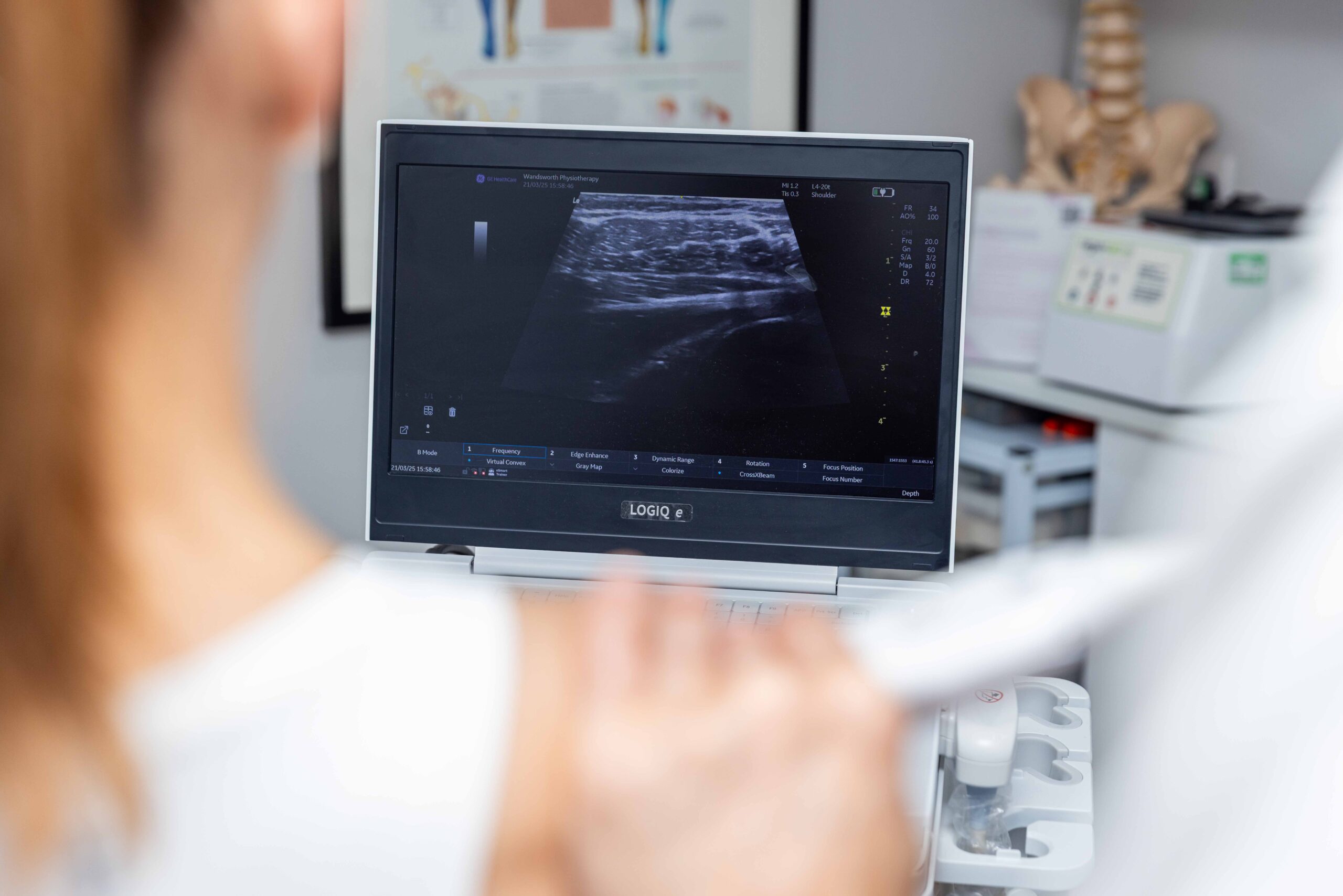
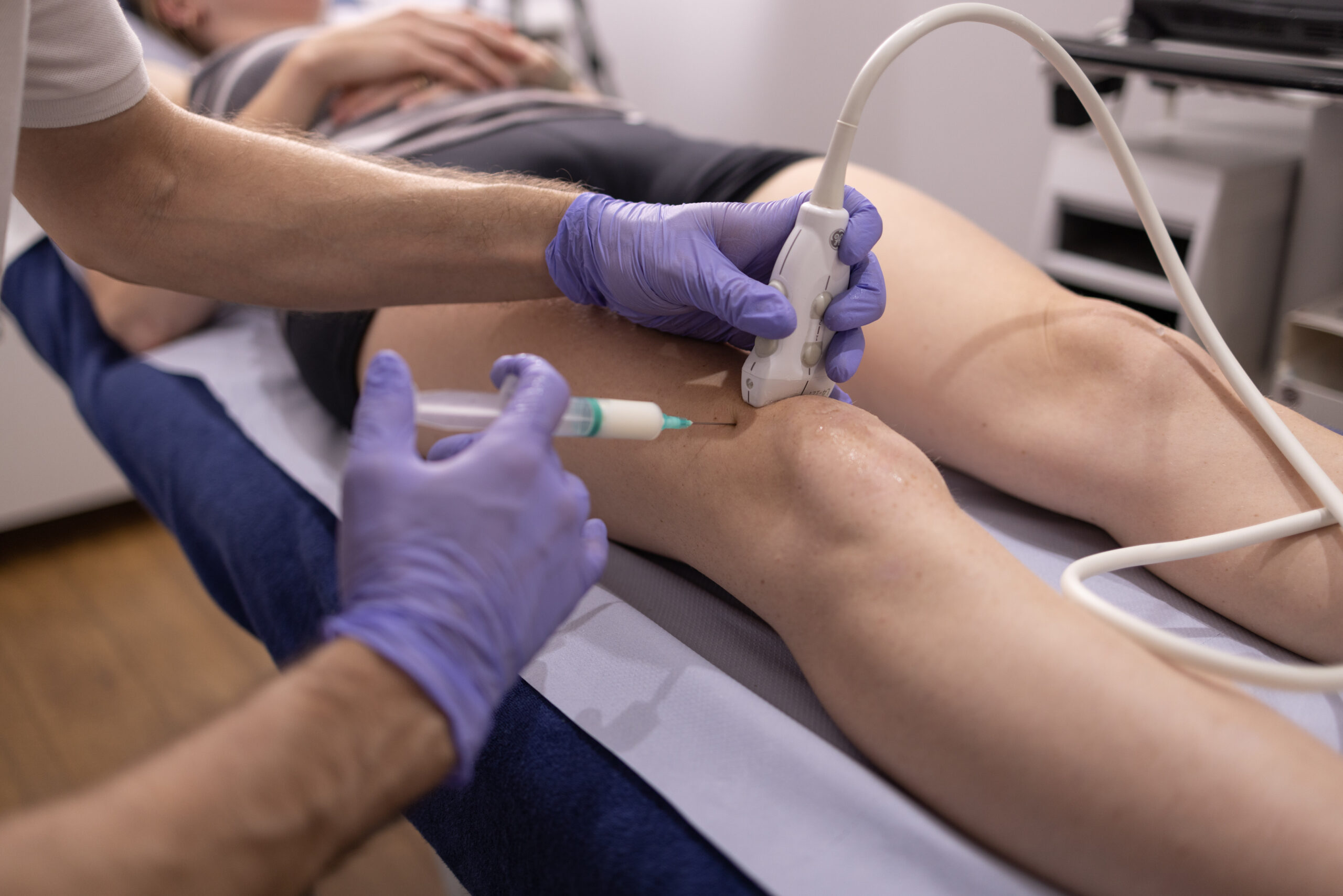
At our clinics in Wandsworth Town, Clapham Junction and Battersea Nine Elms we provide injections using ultrasound guidance. This helps to ensure the product that we are injecting ends up in the desired body part or tissue. The efficacy of land-mark guided injection also called blind injections (where no imaging guidance is used) is sub-optimal, often with the substance being injected not ending up in the desired tissue. Therefore, the injection is much less likely to provide you any relief from your symptoms.
As with all injections there are pros and cons as well as side effects that will be established before your injection so you can make informed consent as to whether you proceed or not.
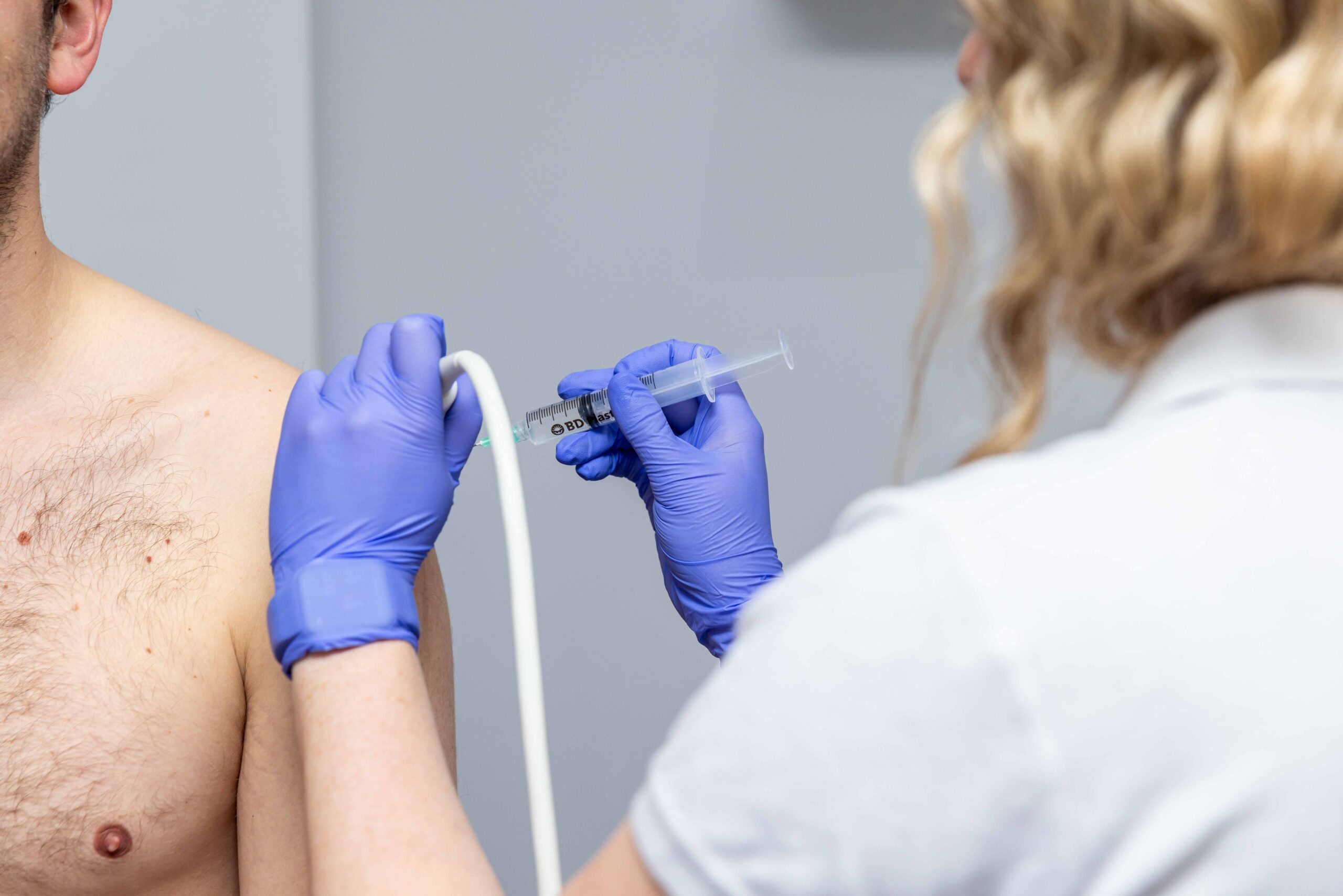
Our Wandsworth Physiotherapy and Osteopathy ultrasound guided injection clinics in Wandsworth Town | SW18, Clapham Junction | SW11 and Battersea Nine Elms | SW8.
All our injections are delivered under ultrasound guidance to ensure efficacy and safety. There are various substances that can be injected and these will be discussed with you prior to your appointment. Please note we do not offer US guided injections for the spine or pelvis.
Call or book your appointment online. We will send you a pre-appointment patient information sheet regarding the injection you have chosen. We will also send you an injection new patient form to fill in. It’s important that you have read this information and filled in the form prior to your appointment as it may mean we can’t proceed with the appointment if you haven’t done these things.
We offer a one stop shop of assessment, scan, prescription and injection.
Your initial appointment with the injection specialist (a physiotherapist) will be 30 minutes. In that time you will be asked to explain your injury, how it happened, how long you have had it and how it makes you feel. You will be asked to set some goals about what you want to achieve from your time spent with them.
Your injection specialist will also run through your past medical history finding out about any medical diagnoses or medicine that you take. This is extremely important as we may or may not be able to proceed with injection based on this.
Next your injection specialist will carry out a physical examination looking at the affected area plus carry out an assessment of your posture and how you move, they will also ultrasound scan the affected area to help diagnose the problem and assess that an injection is the suitable treatment option.
Once we have made a diagnosis, checked your medical history, you have had any side effects of injections explained to you and you have consented to receive an injection we will go ahead with your treatment.
There may be a small chance that we cannot proceed with injection, however we will have done our best to establish this prior to the appointment. If for some reason based on the assessment that an injection is not to be carried out you will be charged a consultation fee but not the full cost of the injection. Reasons that we might not be able to proceed with an injection include:
At our Ultrasound Guided Injection Clinic we offer a full range of soft tissue and joint injections to help manage pain, reduce inflammation, and improve mobility. All injections are performed under ultrasound guidance for precision and are administered with local anaesthetic to make the procedure as comfortable as possible.
Corticosteroid injections are highly effective at reducing pain and inflammation in irritated joints, bursae, or tendons. They are suitable for conditions such as knee or shoulder arthritis, bursitis, frozen shoulder, or tendon irritation. Relief is typically quick, often within days, though the effect may last from several weeks to a few months depending on the condition.
We most commonly use Durolane and Ostenil Plus, and more recently Sinovial.
Both Ostenil Plus and Durolane work very well. Durolane is slightly more potent and therefore may be slightly more effective, but with a marginally higher risk of temporary inflammation.
How effective is a HA injection?
Overall, there is a 65–70% chance of a positive response from a single injection. If the injection is effective, the benefit can last up to one year.
Evidence shows that if you respond well to your first injection, there is an excellent chance you will also respond well to subsequent injections—including second, third, fourth, and even fifth injections—each typically providing relief for around a year. From the sixth and seventh injections onward, the effect may become slightly less effective and shorter lasting, mainly due to aging and progression of arthritis.
Hyaluronic acid acts as a joint lubricant and shock absorber, restoring the natural viscosity of the synovial fluid. These injections are ideal for mild to moderate osteoarthritis where cushioning and lubrication have diminished, helping to improve comfort and movement for 6–12 months or longer.
Arthrosamid is a next-generation polyacrylamide hydrogel injection used for the long-term management of knee osteoarthritis. Unlike HA, it does not degrade over time. Once injected, it integrates into the joint lining to provide sustained cushioning, lubrication, and inflammation control. It’s particularly suitable for patients who have already tried steroid or HA injections with only short-term benefit, offering a longer-lasting solution without surgery.
Platelet-Rich Plasma (PRP) therapy uses your own blood to help repair injured tissues. Blood is made up of cells -including red blood cells, white blood cells, and platelets – and plasma, which contains water, proteins, hormones, and growth factors. PRP is created by concentrating your platelets and plasma, which are rich in these growth and repair factors, and injecting them into the injured area to support healing. Most clinics use a form called leukocyte-poor PRP, which has a lower concentration of white blood cells and is especially effective for joints, though leukocyte-rich PRP is sometimes used for tendons.
PRP is considered an unlicensed medicine, so it does require a prescription, which we can arrange. The therapy has strong evidence for improving pain and function in conditions such as knee arthritis, tennis elbow, and plantar fasciitis, and some evidence suggests it may also help with gluteal tendinopathy. Other joints and tendons can also be treated, though results may vary.
The procedure begins with an ultrasound scan to ensure the injection is appropriate. A small sample of blood is then drawn from your arm and processed in a centrifuge to produce the PRP, which is injected into the symptomatic area under ultrasound guidance. While having blood drawn and receiving the injection may be slightly uncomfortable, most patients find the process easier than expected.
There is no strict limit on the number of PRP injections you can have, as it uses your own biological tissue. A course of two to three injections, spaced one to two weeks apart, is often recommended to achieve the best results, delivering a higher total number of platelets to the injured tissue. The effects of PRP can last up to a year or more, and repeat injections can be given if needed.
In some cases, PRP may not be suitable, such as if you are taking blood-thinning medications like warfarin. Your clinician will discuss any concerns with your GP and may check clotting factors before proceeding. After the injection, mild pain or soreness is normal for a day or two, and areas treated with local anaesthetic may feel numb for a short period. Observation in the clinic immediately after the procedure is standard, and light rest is recommended: avoid exercise for a few days for joint injections, or for about a week if tendons are treated.
Because PRP uses your own tissue, side effects are minimal. Occasionally, patients may experience a temporary flare-up of pain or mild soreness, and, very rarely, infection. Ice and paracetamol are usually enough to manage any discomfort.
Whether your goal is fast pain relief, improved joint mobility, or a longer-term management option, our experienced clinicians can advise which injection, or combination, is most appropriate for you.
How can we assist?